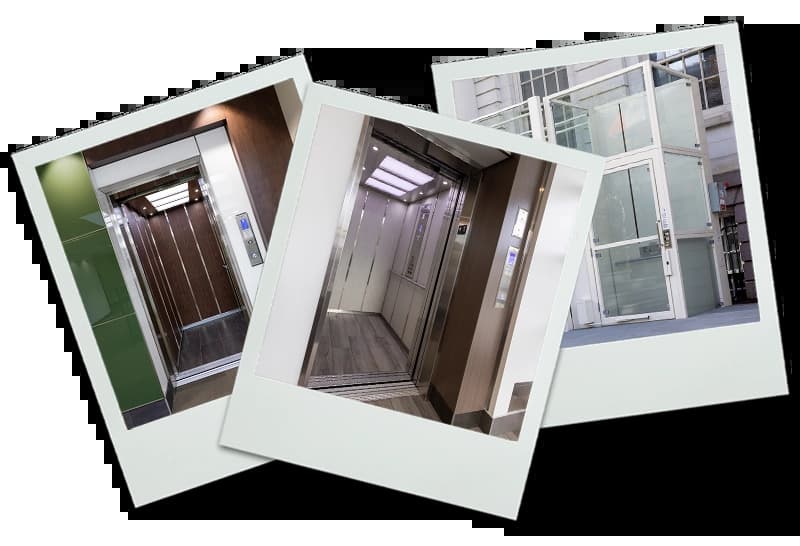
Ultimate Guide
to Commercial Accessibility
Every public space — from restaurants and retail stores to places of worship and government offices — should be accessible to people using wheelchairs or mobility devices. If your space has steps, stairs, or other barriers, this guide will help you choose the right accessibility solution: a wheelchair lift or elevator. You’ll learn what kind of lift you need, where it can go, and how much space is required.
Three Questions to Get Started with Commercial Accessibility

- Outdoor Accessibility – do you need a lift at your entrance?
- Indoor Accessibility – do you have stairs inside?
- How much space do you have for an accessibility lift?
Outdoor Accessibility – do you need a lift at your entrance?
If you have stairs leading up or down to your door you most likely need a wheelchair lift.
If you have only one step, you might be able to add a simple ramp or threshold ramp to provide access. But most often, this is not enough to create accessibility because in new construction, a ramp must meet 1:12 slope ratio. In simple terms, that means a 7” rise will require 7 feet of ramp. A ramp is often impractical to install for access as it takes too much space to create a low slope – for example, if you need to over 24”, you will need a 24-foot ramp. A wheelchair lift is usually a better choice.
Here are 3 options for outdoor accessibility
- VPL – a standard/open vertical platform lift (commonly called a deck or porch lift)
- VPL – a vertical platform lift with enclosure
- IPL- an inclined platform lift installed onto the stairs
Indoor Accessibility – do you have stairs inside?
If you have stairs anywhere inside, you will should add lift or elevator to create access to other levels.
Here are 4 options for indoor accessibility
- VPL – a vertical platform lift with enclosure (has limitations)
- VPL – a vertical platform lift inside a hoistway
- LU/LA (limited use/limited application), an automatic elevator inside a hoistway
- IPL – an inclined platform lift installed onto the stairs
How much space do you have for an accessibility lift?
- For a vertical platform wheelchair lift, you will need a footprint of approximately 25 sq feet
- For an inclined platform wheelchair lift, the lift is post-mounted on structural stairs, or wall-mounted, and you will need clearance for the platform at the top and at the bottom of the stairs you will need enough space for the unfolded platform. In some jurisdictions, you may also require fire egress beside the lift, meaning that the staircase must be very wide
- An accessibility elevator (LU/LA), needs a minimum of 36 square feet, and requires a 14” pit below the elevator, and at least 108” inches of overhead (the height of your ceiling at the top landing). Overhead requirement differs between new and existing construction.
Vertical Platform Lifts

- A vertical platform lift features a platform with automatic ramp, that is easily accessed by a person using a wheelchair. Operated by ‘push-to-run’ buttons, also known as constant pressure operation, the lift travels vertically to the next level of a building. Lifts can be powered by a hydraulic drive, or a screw drive. This type of lift can travel up to 14 feet in the USA, and 23” feet in Canada (this varies by applicable code) and they are suitable for indoor or outdoor use depending on the model and configuration.
Basic Components of a Vertical Platform Lift
- Upper Landing Gate with interlock
- Drive tower
- Operating Panel
- Call/Send Station
- Platform Gate with interlock
- Platform
- Automatic Access Ramp

Types of vertical platform lifts
- Unenclosed, standard lifts
- Enclosure lifts, where the enclosure is made by the lift manufacturer
- Hoistway/shaftway models, where the general contractor builds a shaft on-site for the lift
- Specialty models such as mobile lifts
Unenclosed/ Standard lifts Features
- For commercial/public installations, an unenclosed vertical platform lift can travel a maximum of 60” (ASME 18.1 code).
- A platform gate is required, protecting the user inside the lift when it runs
- An upper landing gate with interlock is required to prevent opening unless the lift is at the landing
- Used for simple two-stop, short distance travel needs

Enclosure lift features
- Includes a 4-sided enclosure for the lift to travel in, ideal for outdoor use due to weather protection
- Can be used indoors but cannot be installed to penetrate a floor. Often used in a lobby to access a mezzanine or a few steps rise
- Limited to 14’ of travel in the USA, 23’ in Canada by code
- Can be customized for up to 4 stops
- Many options are available to customize the enclosure and the lift to suit your needs and design preferences

Hoistway vertical lifts features
- Used for indoor applications, often where the lift needs to penetrate a floor
- A shaftway/hoistway is constructed by your general contractor
- Can travel up to 4 stops, to 14’ in the US, or 23’ in Canada (14’ in Quebec)
- A common upgrade is an 80” semi-enclosed cabin to make the lift more comfortable

- If you need a moveable lift, a mobile vertical platform lift may be possible, but is subject to your local authority’s requirements
- Travel up to 48”, and includes a portable top landing gate and lockable casters
- Suitable for use to access a stage for temporary use
- Mobile lifts are not acceptable in all jurisdictions

Drive Systems for Vertical Platform Lifts
There are two major drive systems used for vertical platform lifts – hydraulic drives, and screw drives. A hydraulic system is more common for commercial installations, whereas a screw drive with its slightly lower cost is more common for residential and lower travel need installations.

Hydraulic Drive System Advantages
- Faster travel speed than screw drive
- More heavy-duty usage, and expected longer overall product life
- Easy manual lowering function from outside the shaftway
- More suitable for taller travel
A hydraulic drive wheelchair lift uses a motor that powers a pump to move hydraulic fluid in and out of a cylinder to create the up and down motion. It’s a reliable system that delivers a smooth ride.
Screw Drive Advantages
- Usually less expensive than hydraulic
- Simple mechanical system
A screw drive wheelchair lift is a simple system that uses a large vertical screw and a nut powered by a motor to move the platform up and down. It is usually slower than a hydraulic drive and used for shorter travel distances.
What Are the Sizes for Vertical Platform Lifts
To accommodate a wheelchair, the width of the platform will be 36” wide. The common platform sizes are:
- 36 W x 48 L
- 36 W x 54 L
- 36 W x 60 L
- Alternatively, the platform can be 42” wide.
*For 90-degree applications, 42 W x 60L is common
Savaria can create a custom sized platform up to 18 sq feet. If you require a smaller footprint for an existing shaftway, a custom size can be done. However, in the USA and Canada, accessibility code may require a minimum size that your local dealer can advise you about.

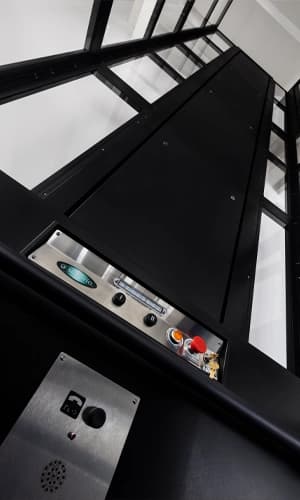
How to Configure Your Vertical Platform Lift
Measure the Travel Distance
Travel distance for a vertical platform lift is measured from the bottom landing to the bottom of the top landing. A Savaria vertical platform lift has a minimum travel distance of 7” and a maximum of 14 feet (USA and Quebec, and 23 feet in the rest of Canada).
How Many Stops Do you Need?
With hoistway or enclosure model, you can have up to 4 stops. With an open/standard lift, you can have 2 stops.
Do you need more than one entrance?
The most common configuration for a vertical platform lift is a Type 2, with 2 points of entry. This is the easiest to navigate in a wheelchair since you can roll on and off straight through the lift. If your site will accommodate this configuration, it is the best option for wheelchair users.
Some lifts only have one entrance/exit, called Type 1. This type of lift usually requires the wheelchair user to roll out backwards from the lift. Typically, you would need to provide an automatic door operator for this configuration with full height door, meaning that travel just be a minimum of a full floor (no split level/half height travel is possible).
A lift with 2 entrances at 90 degrees to each other can be harder to navigate for a user in a larger wheelchair. To make it easier for the user, accessibility code srequire the platform to be a minimum of 36×60 or 42×60. Doors must be on the long side and provide 42” clearance, and landing doors must provide auto operation.
These are different entry and exit types. Note the position of the travel tower in relation to the entrances.
For an outdoor, standard wheelchair lift, consider these:
- A reinforced concrete pad with strong base is needed, to prevent movement due to weather changes
- Typically, the base is 6-8” thick to anchor the lift, but must meet local building code requirements (note some configurations may require additional anchoring)
- The concrete pad should be large enough to fully accommodate the lift, and the deployed automatic access ramp
- Be mindful of the approach path to the lift to provide easy access to the lift
- You will need to order a top landing gate with interlock (by Savaria)
36 x 54 lift (Type 2 with straight through access), and platform gate
Requires 82” by 54 ¼” pad (should show that the full swing of PF gate is off the pad)
The site preparation of the concrete slab, and the electrical may be arranged by your local contractor, or in some cases the local dealer. Consult the model-specific planning guide for full details.
For an enclosure wheelchair lift, the requirements are very similar, but there are specific additional considerations to ensure proper support of the enclosure tower. Due to the custom nature of enclosure lifts, the local dealer can assist you with full details on a specific lift configuration.
For a hoistway-style wheelchair lift, you will need
- A support wall to secure the lift that is made with 2×4 or 2×6 framing, a concrete wall, or concrete filled masonry blocks (CMU), or structural steel. Metal studs cannot be used for tower securement.
- Non-supporting hoistway walls are framed/constructed the same way as the rest of the building as they are standard wall construction. As the lift travels along a flush surface, the shaft must be plumb and level with only a 1/8’’ tolerance from top to bottom
- A structural floor is required, and it can either include a 3’’ recess/pit, or an access ramp will be required.
- Please see the Planning Guide for structural load for impact, deadload, and pull-out force for the support wall.
Vertical platform lifts have defined electrical requirements
- The shop drawing for the specific lift includes electrical requirements and the Planning Guide also includes electrical requirements
- A fused disconnect with auxiliary contact or other acceptable disconnect is required and varies by AHJ (authority having jurisdiction)
- An additional 110v GFI outlet in the hoistway for hoistway applications, and your local AHJ may also require it on enclosure and deck lift applications
- Lighting at the top of the hoistway and each landing with a minimum of 100 lux
- An active phone line, or other approved 2-way communication system such as the Savaria One Touch alert (sim-card, GSM-based)
See the Planning Guide for more details, including other requirements for installation and site preparation.
Savaria makes several models of vertical-style wheelchair lifts: a hydraulic V1504, a hydraulic Prolift for hoistway applications, and the screw drive Multilift. Model choice will depend on your specific site needs and budget. All wheelchair lifts are operated using constant pressure buttons.
| Decklift Application | V-1504 | Multilift* |
|---|---|---|
| Drive system | Hydraulic | ACME screw drive |
| Max capacity | 750 lb | 750 lb |
| Number of stops | 2-4 | 2 |
| Average speed | 20 ft/min | 8 ft/min |
| Max travel | 14’ USA/<br /><br /> 23’ Canada | 6’ |
| Outdoor use? | yes | yes |
| Enclosure Applications | V-1504 | Multilift* |
|---|---|---|
| Drive system | Hydraulic | ACME screw drive |
| Max capacity | 750 lb | 750 lb |
| Number of stops | 2-4 | 2 |
| Average speed | 20 ft/min | 8 ft/min |
| Max travel | 14’ USA/<br /><br /> 23’ Canada | 6’ |
| Outdoor use? | yes | yes |
| Hoistway/shaftway applications | V-1504 | Multilift* | Prolift |
|---|---|---|---|
| Drive system | Hydraulic | ACME screw drive | Hydraulic |
| Max capacity | 750 lb | 750 lb | 1400 lb |
| Number of stops | 2-4 | 2 | 2-4 |
| Average speed | 20 ft/min | 8 ft/min | 30 ft/min |
| Max travel | 14’ USA/<br /><br /> 23’ Canada | 6’ | 14’ USA/<br /><br /> 23’ Canada |
V 1504 Wheelchair Lift Model comparisons
The V1504 wheelchair lift can be configured in many ways based on your needs. The chart below shows some differences between models.
| Unenclosed | Enclosure | Lux and Framed Prestige | Prestige* | |
|---|---|---|---|---|
| Outdoor? | yes | yes | yes | yes |
| Number of stops | 2-4 | 2-4 | 2-4 | 2 |
| Max travel | 14’ USA/<br /><br /> 23’ Canada | 14’ USA/<br /><br /> 23’ Canada | 14’ USA/<br /><br /> 23’ Canada | 6’ |
| Additional | Best for basic, low-rise travel. No weather protection | 3 or 4-sided painted aluminum enclosure, with many custom options | Stainless steel framing with glass inserts | Frameless-style glass with stainless steel |
Multilift Commercial Wheelchair Lift Model Comparisons
The Multilift is generally less costly as it uses a screw drive. This wheelchair lift offers three styles.
| Unenclosed | Enclosure | Mobile | |
|---|---|---|---|
| Max travel | 60” (72” Canada) | 72” | 48” |
| Customizable | yes | yes | no |
Savaria Prolift
The Savaria Prolift is wheelchair lift with an enclosed cab that gives it an elevator feel, but with basic features. It uses a hydraulic drive and offers a range of capacity options with a maximum travel distance of 14’ in the USA (23’ in Canada). This basic lift is less costly than a LU/LA automatic elevator and requires less overhead and a more shallow pit. The Prolift requires a machine room. Prolifts are often chosen for places of worship and schools. As it travels at the same speed as a LU/LA, it is often used for tall travel as it minimizes the trip duration between floors.
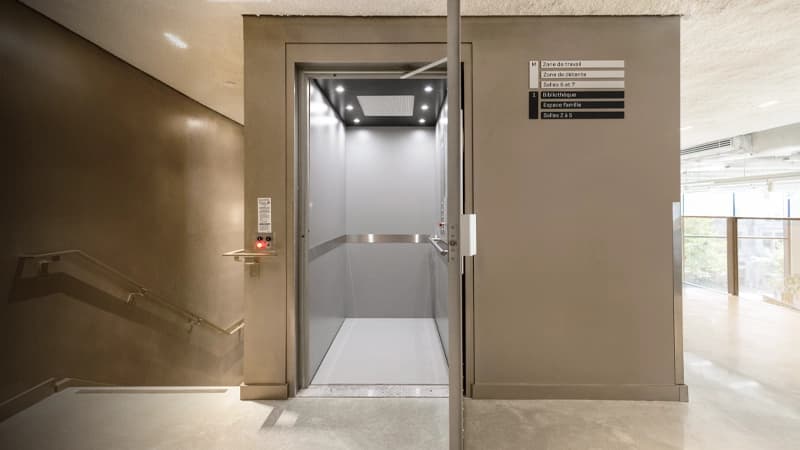

Basic Components of Savaria Prolift
- Overhead (minimum of 92”)
- Hoistway
- Guide rails
- Hydraulic cylinder
- Aircraft cables
- Cab
- Cab operating panel
- Pit (8” minimum)
Vertical platform lifts can be customized for size and travel distance. The standard paint color is beige, but upgrades include optional colors, RAL colors, different gloss levels, and different textures of paint.
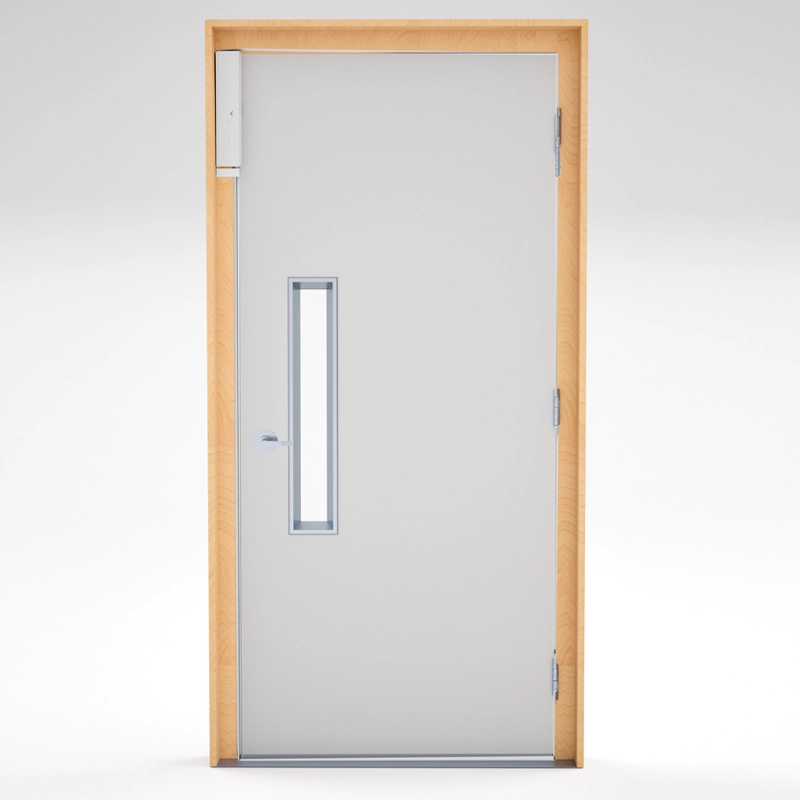
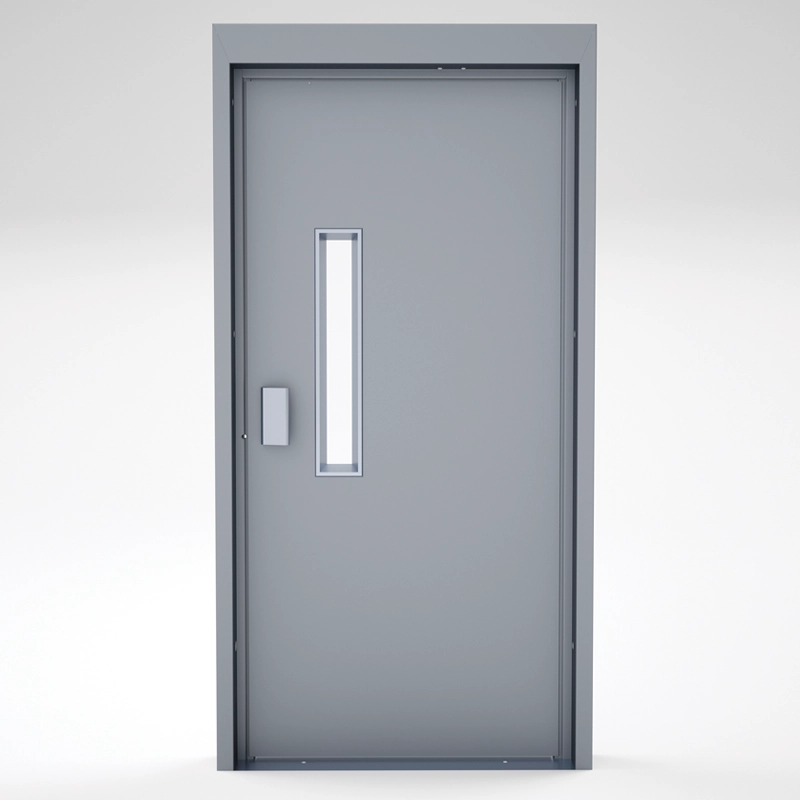
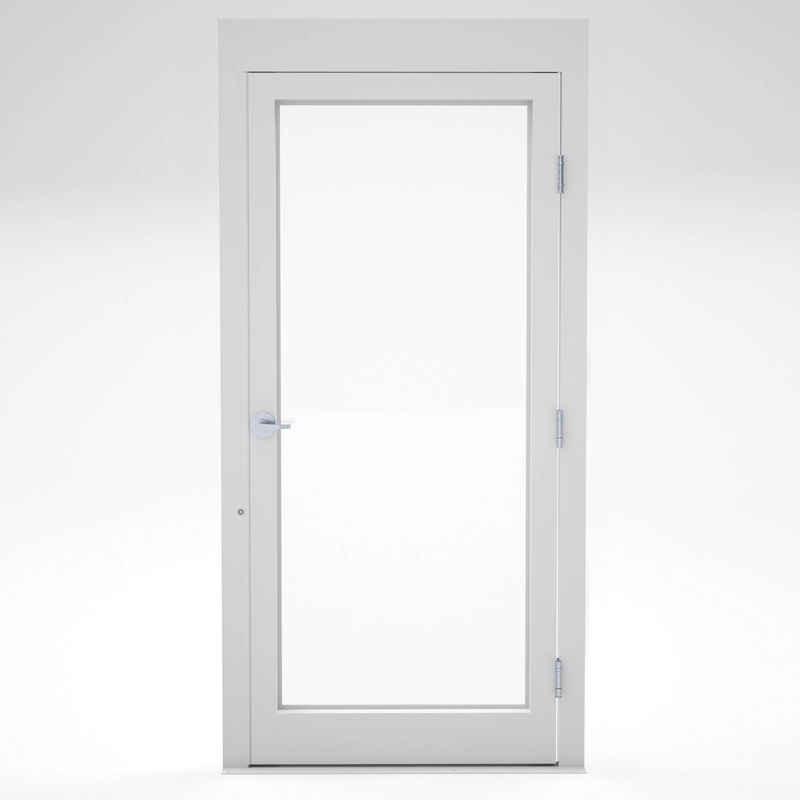
The Savaria V1504 and Multlift wheelchair lifts can be ordered with enclosures. Enclosures are ideal for outdoor applications to protect riders. They can be used indoors to access mezzanine areas, or for short travel in non-fire-rated applications, where the barrier is 3-4 steps in the lobby of a building.

What Safety Features Are Important on a Vertical Wheelchair Lift
Located under the platform on deck/porch lift applications, the underpan includes a safety sensor system that stops the lift if it encounters any obstructions while descending. This system is always included on unenclosed models and is optional on other models.
The Savaria V-1504, includes a safety brake mechanism engages to stop the lift should the chain break. A second brake acts as a back-up system.
The Savaria Multilift uses a back-up nut that stops the lift should there be a drive malfunction.
If there is a power failure, a V1504 lift can be lowered to the next available landing using a manual lowering device. The device is located at the lowest landing. Simply pull the cable continuously to lower the lift. See the Owner’s Guide for the complete procedure. Additionally, a 12-volt battery powers the controller and hydraulics to lower the lift and unlock with door/gate.
With the optional battery back-up, a 24vDC battery and different motor and pump unit provides up to 5 up/down trips during a power failure. This option is required if the lift is part of an accessible path.
A manual hand crank is available for emergency lowering when necessary. With the optional battery back-up, a 24vDC battery the the lift provides up to 5 up/down trips during a power failure. This option is required if the lift is part of an accessible path.
For emergency use, the Prolift can be lowered to the lowest floor using a manual lowering device. This device is contained in the hydraulic tank in the machine room. To operate, simply pull on the red mushroom continuously and the lift will lower. Details for this procedure are in the owner’s manual. There is no optional battery back-up system for the Prolift, however, in commercial settings, a back-up generator within the building should include the Prolift.
Savaria wheelchair lifts comply with United States A18.1.1 safety standard for platform list and stairway chairlifts. In Canada, they meet CSA B355 code. It is important to note that your local jurisdiction may also impose specific standards. Always consult your local Savaria dealer for local regulations.
LU/LA Elevators
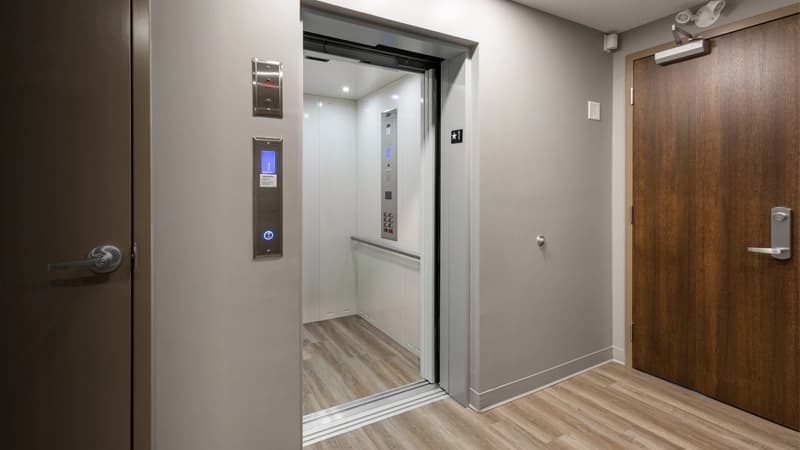
5 Things to Know about a LU/LA Elevator
- Meets ADA and A117.1 standards
- Maximum travel is 25 feet
- A 14” pit is required below the elevator
- Overhead can be a little as 108”, allowing the elevator to be retrofitted more easily
- Usually less maintenance versus a full-sized elevator
- A limited use, limited application elevator is a specialty elevator well-suited to accessibility needs. Unlike wheelchair lifts, they feature fully automatic operation and function like full-sized passenger elevators but are less costly than a full-sized passenger elevator. They can serve low-rise, 3-story buildings and require less overhead and a more shallow pit than a large commercial elevator. Savaria LU/LA elevators are ADA and A117.1 compliant and wheelchair accessible.
Savaria LU/LA Elevator Drive Systems
Hydraulic
A 1:2 hydraulic drive with 5 hp submersed motor powers the elevator moving on two steel aircraft cables. Provides a smooth, stable ride. In most AHJ, a dedicated 4’ by 5’ machine room is required.
Geared Traction and Machine Roomless
A geared motor and counterweight traction system powers the elevator moving on three steel cables. This quiet system has a machine roomless option and is the best choice if you expect more uses/trips per day.
Sizes and Door Configurations for LU/LA Elevators
The Savaria Orion LU/LA elevators can be ordered as
- 48w x 54l
- 42w x 60l
- 51w x 51l (for 90-degree applications)
The cab height is 84”. The maximum size for the cab is 18 square feet. (W x L), with 1400lb maximum capacity.

Elevator Doors
The Orion includes two-speed automatic doors for the cab and landings. Note that you can add a second door to this elevator for straight-through, or 90” access. It’s important to note that if you configure doors at 90 degrees, you must use a 51” square cab size to meet accessibility code.
There are some key differences between the Orion MRL geared traction elevator and the hydraulic drive model.
| Geared traction | Hydraulic | |
|---|---|---|
| Machine Room? | optional | required |
| Other | Higher daily cycle usage | Lower base price |
| Minimum Overhead | 108” | 108” existing construction<br /><br /> 134” new construction |
| Noise level (typical) | 54 dba | 73 dba |
Construction Considerations for an Accessibility Elevator
There are some key differences between the Orion MRL geared traction elevator and the hydraulic drive model.
If you choose the hydraulic model, or the geared traction without the machine roomless option, you will need to construct a machine room that meets the Planning Guide specifications. The room is generally 48” by 60” with a door, lighting and electrical provisions.
Machine Room-Less Design
The Savaria Orion MRL can be installed (in most AHJ) with the controller adjacent to the elevator, rather than in a separate machine room. Additional information about this option is available in the Planning guide.
Show door buck controller Cab styles
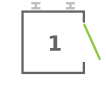
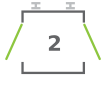
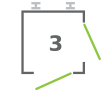
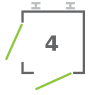
| Cab size | Type 1 | Type 2 | Type 3 | Type 4 |
|---|---|---|---|---|
| TRADITIONAL CAB | ||||
| 42" x 54" (1067 mm x 1372 mm) | ✓ | ✓ | ||
| 42" x 60" (1067 mm x 1524 mm) | ✓ | ✓ | ||
| 48" x 54" (1219 mm x 1372 mm) | ✓ | ✓ | ||
| 51" x 51" (1295 mm x 1295 mm) | ✓ | ✓ | ||
| ORION17 MODERN CAB | ||||
| 42" x 54" (1067 mm x 1372 mm) | ✓ | ✓ | ||
| 42” x 60” (1067 mm x 1524 mm) | ✓ | ✓ | ||
| 48” x 54” (1219 mm x 1372 mm) | ✓ | ✓ |
Hoistway
A fire-rated hoistway must be constructed for the elevator. Refer to the model-specific planning guide for full details on hoistway construction. When you place an order for your elevator, detailed shop drawings for your project are provided for precise measurements.
For open concept designs, your local AHJ may allow glass hoistways (non-fire-rated). In these cases, the Orion can be ordered with a glass cabin and glass doors.
Site Assessment
It’s best to work with your local Savaria dealer early in the process to plan for the construction needs of your accessibility elevator. This will ensure you leave enough space for the hoistway, overhead, pit and wheelchair egress. It is also important to know the fire rating requirements, and any additional local code requirements for a LU/LA elevator in your region.
Code-Compliance
Depending on the applicable code year in your AHJ, there are different requirements for the elevator. For example, 2019 code requires more advanced communication systems including an in-cabin camera system and chat screen with yes/no buttons. Your local dealer will provide expertise to guide you on applicable code.
Typically, passenger elevators require third party monitoring, and ideally you would provide 24-hour service coverage, as well as emergency entrapment services. These services may not be provided by the installing dealer, check with your local dealer for advice.
How is a LU/LA elevator different from a full-sized passenger elevator?
A full-sized passenger elevator will usually be significantly more costly to install. A standard passenger elevator is designed with a higher capacity, accommodation for a stretcher, and travel at a higher rate of speed. This requires more costly construction for a deeper pit, more overhead space and a larger hoistway overall. A passenger elevator can be configured to any travel distance or number of stops needed. If your need is to service less than 25 feet of travel, a LU/LA elevator can be a great choice.
The Savaria Orion elevator is a fully automatic elevator, whereas the Prolift is a wheelchair lift that operates with constant pressure buttons. The Prolift is less costly with a more basic offering. Both solutions require a hoistway with a pit.
| Prolift wheelchair lift | Orion LU/LA elevator | |
|---|---|---|
| Nominal speed | 30 ft/min | 30ft/min |
| Capacity | 750-1400 lb* | 1400lb |
| Overhead - minimum | 92” | 108”** |
| Pit - minimum | 8” | 14” |
| Max travel | 14’ USA/23’ Canada | 25’ |
| Operation | Constant pressure | Automatic |
Inclined Platform Lifts
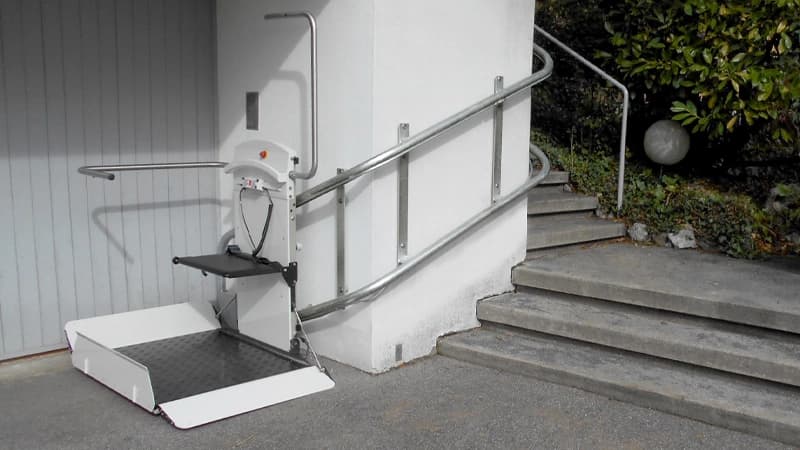
IPLs can be configured for one flight of straight stairs, or multiple flights of stairs, or when the stairs include turns or intermediate landings. Savaria makes the Delta model for a single flight of straight stairs, and the Savaria Pegasus for curved stairs or multilevel needs. These lifts are suitable for indoor applications, and in moderate climates are also suitable for outdoor installations.
- When a LU/LA elevator, or vertical platform are not viable options due to space considerations, an inclined platform lift (IPL) may be the right solution to eliminate the barrier of stairs. An IPL is installed on the stairs, or on the wall of the staircase. The lift travels along a set of guide rails, and the platform folds up when not in use at the top or bottom of the stairs. They can transport a person seated in a wheelchair, or one person on the folding seat.

Basic Components of an Inclined Platform Lift
- Automatic safety arms
- Emergency stop and keyed access
- Audio visual alarm
- Call station
- Pendant control
- Carriage with enclosed drive system
- Folding seat and seat belt
- Automatic folding platform
- Access ramps
The most important space consideration for installing an inclined platform lift is the lower landing clearance. You must have enough space for the platform to unfold and allow the wheelchair user to get on and off the platform.
| Savaria Delta Inclined Platform Lift Measurements | |
|---|---|
| Platform size | 30.5 W X 49.3L |
| Unfolded width | 40” |
| Bottom landing | 74”- 68.1” * |
| Overhead | 87.2” – 106”* |
Clearance space
At the bottom landing, it is important to provide the appropriate space for the user to get on and off the platform – this is called the landing clearance. The space needed depends on the size of the platform chosen and the angle of the stairs. The chart below shows the most common guidelines for the space needed. Those dimensions are for the lift only, and the accessibility code will typically dictate a clear 5-foot approach to the lift depending on the entrance (straight or at 90-degrees).
The width of staircase required will be dictated by: mounting methods, platform size.
| Platform size | 28.4" x 35.5" (720 x 900 mm) | 26.5" x 36" (673 x 914 mm) | 28.5" x 44" (724 x 1118 mm) | 30.5" x 49.3" (775 x 1250 mm) |
|---|---|---|---|---|
| Unfolded width (A) | 37.8" (959 mm) | 36.4" (923 mm) | 38" (966 mm) | 40" (1017 mm) |
| Bottom landing (B)* | 60.2"-54.4" (1530-1381 mm) | 60.8"-54.9" (1544-1395 mm) | 68.8"-62.9" (1747-1598 mm) | 74"-68.1" (1880-1731 mm) |
| End of rail (C)* | 44.9"-38.2" (1140-971 mm) | 45.2"-38.5" (1147-978 mm) | 49.2"-42.5" (1249-1080 mm) | 51.8"-45.1" (1315-1146 mm) |
| Overhead (D)* | 80.8"-94.6" (2053-2402 mm) | 81.1"-95" (2059-2413 mm) | 84.8"-101.6" (2153-2580 mm) | 87.2"-106" (2215-2692 mm) |
FAQs
Other things to know about Commercial Accessibility
Some of the most common questions people have are answered below. Your local Savaria dealer is also a great resource to answer your questions, including those specific to your home.