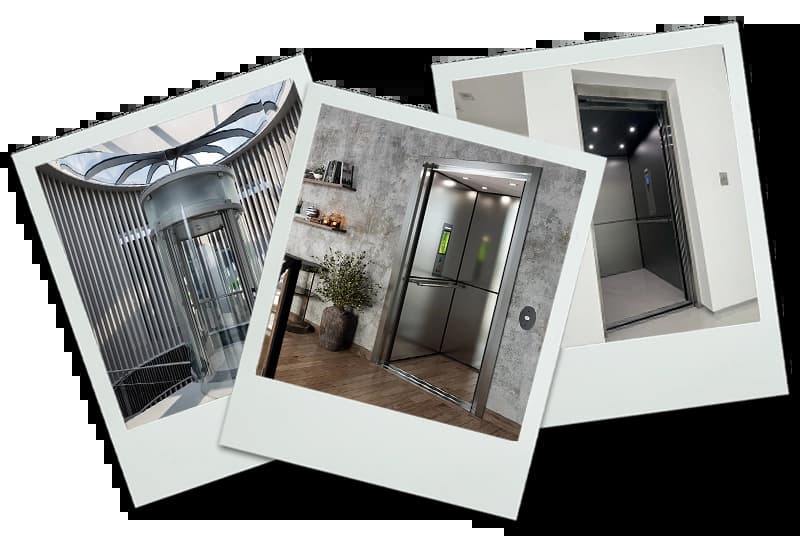
Ultimate Guide
to Material Lifts
Choosing the right home elevator for your needs is something you might only do once in your lifetime, so you may not know much about it yet, but we’ve got you covered. Our ultimate guide includes how to get started, the preparation you will need for installation, guidance on how much it will cost, and how to make your elevator suit your specific needs and design preferences.
Step 1 – Where Can I Put a Home Elevator?
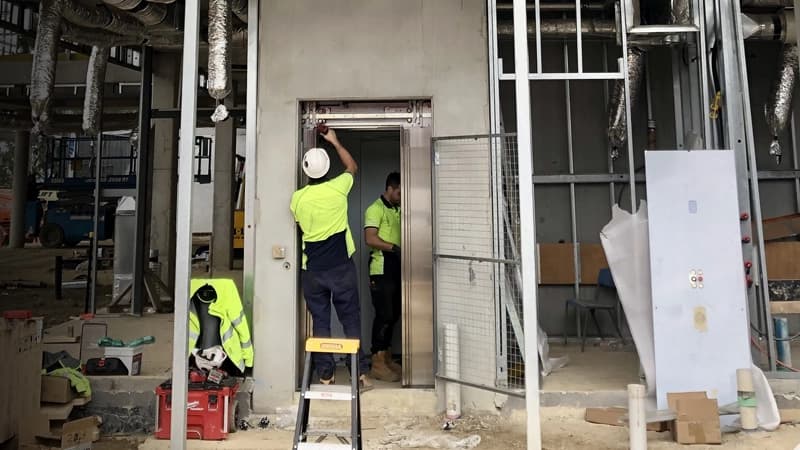
- You need a minimum of 25 square feet (5' by 5') for a traditional home elevator in a hoistway
- Only indoors, although it’s possible to have a door opening to a garage or outside
- Only in a private home, not a business or public building
- A Savaria Vuelift Mini only needs a 50" footprint and includes a glass or acrylic hoistway
A good place to start is to assess the space you have in your home to install it. A home elevator generally requires about 25 square feet on all levels of your house. Please note, that it may be possible to fit a Savaria home elevator in a space of 4′ by 4′ by using a smaller cab. If you want to add an elevator to your existing home, it is important to figure out if you already have that space on each floor, or if you will need to do some renovations in order to create that space. Some homeowners remove closet space and utility space in the basement to make room for the elevator hoistway.
A Savaria Vuelift Mini elevator can be a great choice for retrofits. The Vuelift Mini features an integrated hoistway and the cab and hoistway are both clear (acrylic or glass). With a footprint of only 50″, this elevator has the flexibility to fit inside a wraparound or spiral staircase. You can also attach the Vuelift Mini to a balcony or mezzanine area, or simply place it where it can provide access on each level of your home through the floor. See more about Vuelift here.
If you are building a new home, or you are doing a major renovation, you will have more flexibility about where to place the elevator. But in these cases, the earlier you plan, the better. Advise your architect, builder, or general contractor your intention to include an elevator in your plans. Savaria offers CAD drawings that can be downloaded to easily add the elevator into your plan at the beginning as a reference for space and building considerations. A custom drawing for your exact elevator can be supplied by your local Savaria dealer as you take the next steps in planning. More and more people are including a home elevator in their new home construction plans as it provides both current and future convenience for all to enjoy every level of the home.
If you don’t have space for a hoistway, there are other options available. A Savaria Luma Lift is self-supporting and does not require a hoistway. It offers two-stop access in the home with a luxury feel acrylic cab. See more about the Savaria Luma Lift here.
Get more information about space and planning.
Home elevators, by code, can be a maximum of 15 square feet. But the size of the elevator cab can vary in width, length and height. Savaria elevators can be as small as 36″ by 48″ and as large as 40″ by 54″. The standard ceiling height of the elevator cab is 80″ or 84″. Optionally, you can design your Savaria home elevator to feature a 96″ ceiling height. In some U.S. states, where the local authority permits it, a cab of up to 18 square feet is possible.
If you are installing an elevator to accommodate a wheelchair user, you will want to consider how much space is needed for the chair. Generally, a traditional Savaria home elevator is wheelchair-friendly.


Beyond the square footage or footprint for the home elevator, you will also need to account for the elevator pit. A pit is needed below the elevator in order to keep the door opening level with the bottom floor. The pit is also a safety space which acts as a buffer in case of emergency. The depth of the pit needed varies by each model of elevator, but you will need an average of 8-10 inches below the floor for the pit. The pit must include a poured concrete slab.
A residential elevator also needs space above it at the top landing, called overhead. Again, this space varies by model chosen, but you will need to allow a minimum of 92″ to 96″, measured from the floor of the top level to the ceiling on that same level. The space also acts as a safety area between the car top and ceiling and accommodates equipment that may be atop the elevator cab.
Get more information about pits and overheads required.
Savaria offers “machine roomless” (MRL) home elevators as well as elevators that require additional space for equipment. The amount of space you will need for equipment to run your home elevator differs by model but can be an area in your mechanical room for the controller and electrical disconnect. The Savaria Eclipse elevator can be installed without the need for a machine room, whereas the Savaria Infinity requires a closet-sized space to house the hydraulic equipment that operates this model.
Learn about different drive systems.
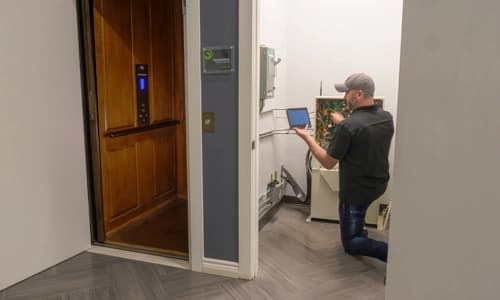
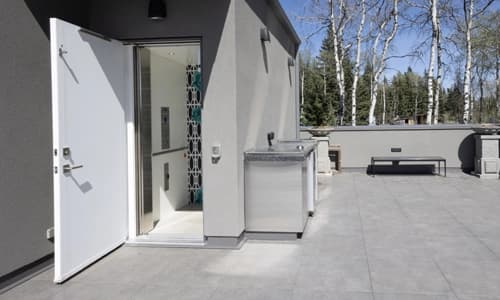
A home elevator is as it sounds – for use only in private homes. You cannot install a home elevator in a business or commercial property. But Savaria also makes elevators and lifts for commercial applications, see more about that here.
You also cannot install a home elevator outdoors. While you can construct a hoistway attached to your home inside an insulated outer wall, the elevator must run inside this fully enclosed hoistway.
You can add a stop for your elevator inside a garage, making it even easier for direct access into your home with groceries, or luggage. Bear in mind that you will need include a door with a vapor barrier/weather stripping and depending on your local code, you may also need to install a fire-rated door, typically to the same standard as a man-door on your garage in your region.
Step 2 – What construction is needed for a home elevator?
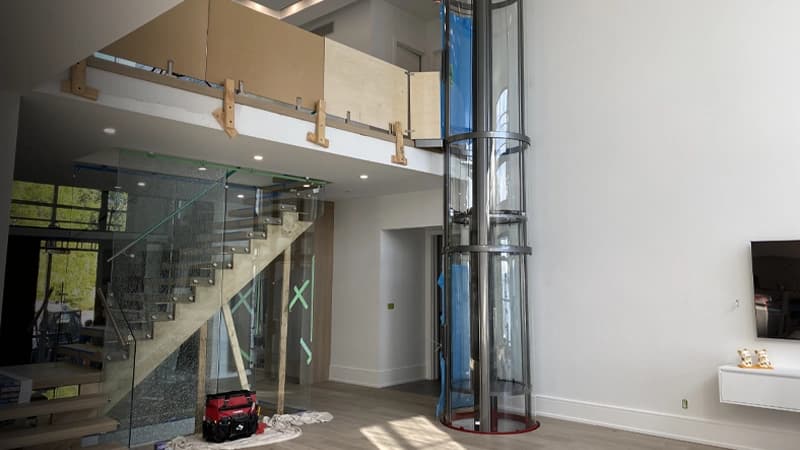
- A traditional home elevator requires a constructed hoistway
- A Savaria Vuelift includes a clear acrylic or glass hoistway
- A Savaria Luma through-floor lift is self-supporting and does not need a hoistway
Most home elevators are built to travel inside a constructed hoistway or shaft. The hoistway must be constructed to specifically accommodate the elevator model and size you choose. One side of the hoistway will need to be reinforced to support the required load of the rails for the specific elevator model, which is detailed in our Planning Guides. The elevator rails will be mounted to this support wall.
The hoistway is built with a series of 2″ by 10″, and 2″ by 4″ lumber, with the space typically finished with drywall.
A shaftway can be left with simple finishing such as painted drywall. But if you plan to incorporate glass in your elevator cab or any glass doors or gates, you will want to finish the hoistway more aesthetically as it will be visible. You can also add lighting to the hoistway when it will be seen, either while riding the elevator, or when you can see inside the elevator shaft through glass landing doors.
Your general contractor is responsible for constructing and preparing the hoistway for the elevator installation. It is therefore important to connect your local Savaria dealer with your contractor early in the process so that construction runs smoothly to the required specifications.
Get more information about hoistway construction and finishing.
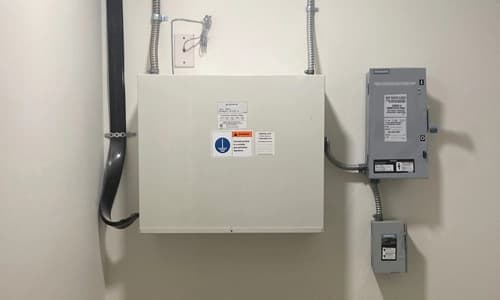
Typically, a Savaria home elevator will require a dedicated 240-volt circuit for the operation of the drive system, as well as a 120-volt circuit for the lighting system. It’s important to check the model-specific planning guide for the full electrical requirements and amperage. A certified electrician will need to install the required electrical according to the Savaria specifications.
Assuming you want your home elevator to give you access to every story of your home, you will design your elevator to have a stop at each level of your house. This is also called a landing. Some homes are designed with levels that are not a full story – such as split level houses. Your elevator can be designed to stop at these levels as well and you will add a second cab door and gate that will either offer straight-through or 90-degree access.
Savaria uses designations Type 1- 5. The Types indicate how many doors the elevator has and also what position the doors are relative the elevator travel rails. The most common configuration is the Type 1 which features a single door for entering and exiting with the rail wall located on either the left or ride side. If your home design requires more than one door, they can be added for access straight through the elevator, or at 90 degrees to each other.

Handy Tip!
When looking at your home design plans, be sure to consider the garage level in your planning process. Many homes have steps up or down to a garage level entrance, but ideally, your home elevator will eliminate the need to use stairs at every level and this should be considered by your architect so you can access the elevator from the same level as the garage. More about elevator doors.
You will most likely require a building permit to install your home elevator because there will be structural requirements to accommodate your elevator. The permit process is often included in the project management services from your general contractor or architect, when doing a major home renovation, or for new construction.
In some jurisdictions, you may need to have your home elevator inspected by local authorities, before the elevator is turned over for your use. Your local dealer will know if an inspection is needed, and will know how to prepare for the inspection.
The ASME (American Society of Mechanical Engineers) sets the standards for home elevators (ASME A17.1), but state or even local governmental authorities may impose their own requirements in addition to the ASME code. Your Savaria dealer will know what requirements must be met in your region.
Savaria dealers understand the importance of a safe installation and abide by safety code standards. This includes an important rule about your elevator gate and door. If you choose an accordion-style or bi-fold gate and pair this with a swing-style landing door, there is a maximum gap that must not be exceeded between the elevator cab gate and the landing door. Known as the ¾” and 4″ rule, the hoistway (inside) of the landing door and landing sill cannot exceed ¾”, and the distance between the hoistway side of the landing door and cab gate cannot exceed 4 inches.
¾ and 4 HERE
Step 3 – Which Model of Home Elevator Is Best for You?
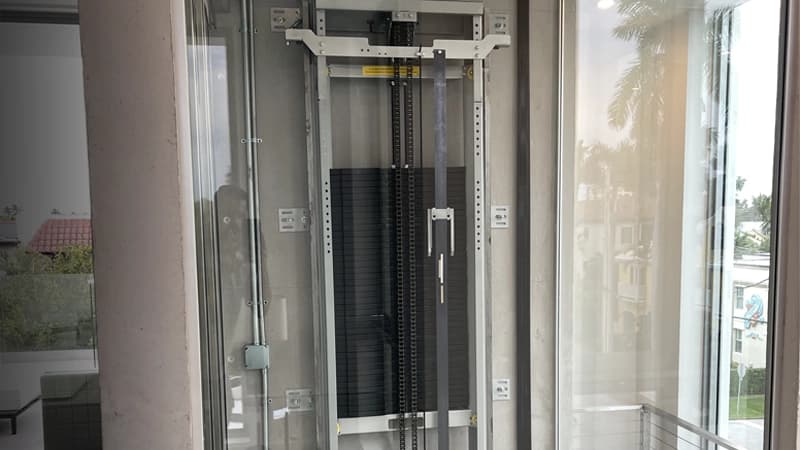
In the construction planning, you may have identified some conditions in your home that will naturally lead you to choose a certain model of elevator. For example, if you cannot find space for a machine room, you will choose a machine roomless model. Here’s some quick information to help you choose the right model for your needs.
- Elevator drive systems have different benefits such as whether they require a machine room or not
- Some drive systems are more quiet than others
Home Elevator Mechanisms and Drives
Savaria offers three types of drive systems for its traditional hoistway-style elevators:
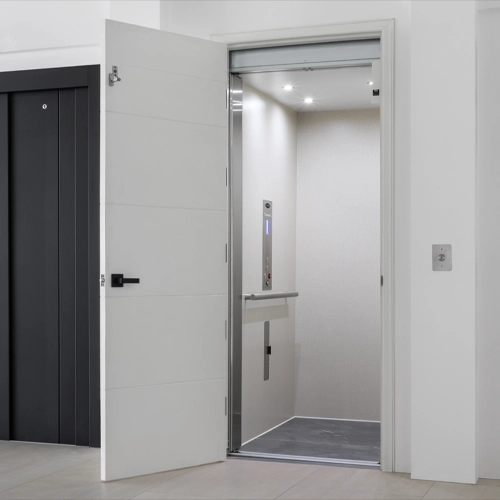
Our most popular model uses a geared chain drive and does not need a machine room. The controller can be installed into an existing mechanical room or nearby closet. The drive mechanism is located inside the elevator shaft above the rails. Additionally, this elevator does not use oil or related oil seals, which means less maintenance fees over the years. The modular design can mean it installs a bit faster than other models.
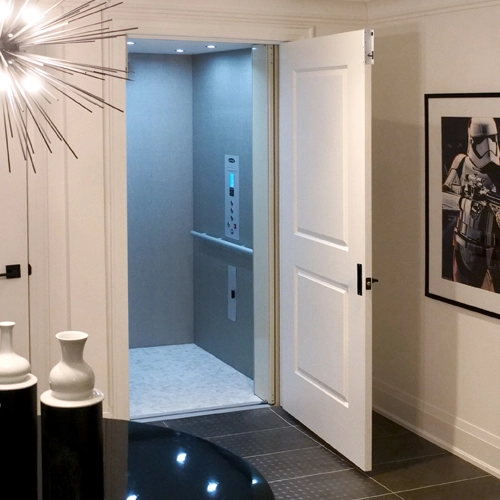
This hydraulic drive model is known for a velvety smooth ride and is somewhat quieter to run than the Eclipse. It requires a separate closet or room for equipment – the machine room.

A residential elevator with commercial-style drive, the Zenith is our premium model with the smoothest ride and most quiet operation. It is also machine roomless, but requires more overall space include more width, a deeper pit and more overhead.
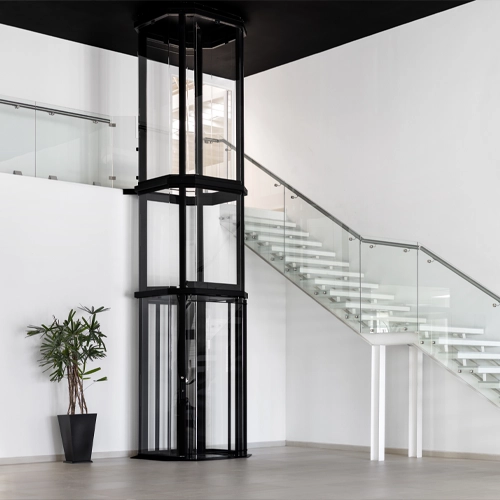
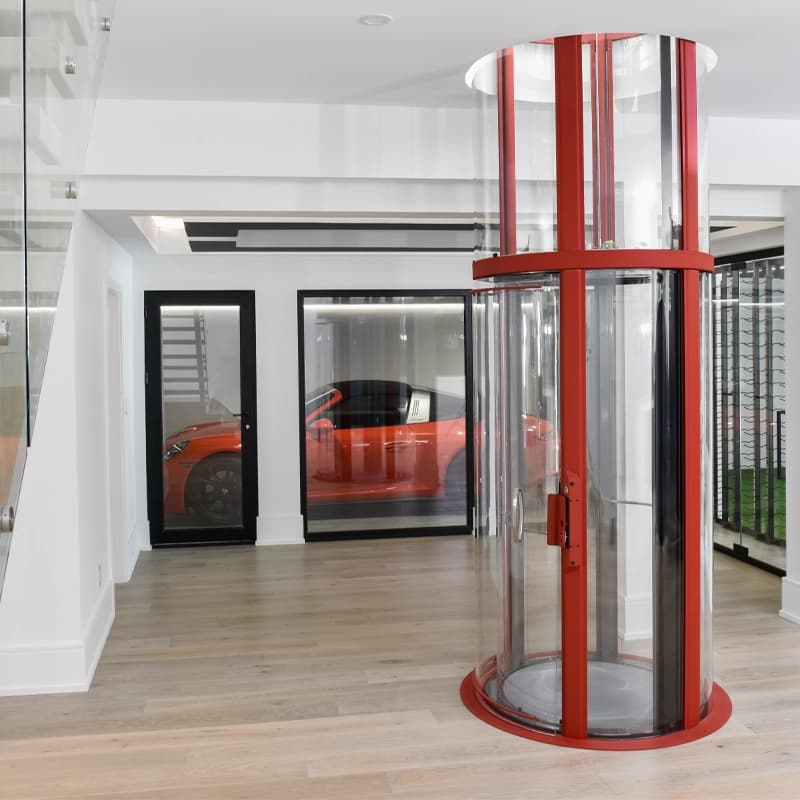
With an integrated clear hoistway, either glass or acrylic, the Savaria Vuelift models use winding drum drive technology, providing a quiet and smooth ride. This drive system and controller are incorporated into the elevator car top and header, or with the controller box located in the basement of the home. A Vuelift can be a space-saver when compared to a traditional design, especially when it is installed inside the unused space of a wrap-around staircase.
Good Tip!
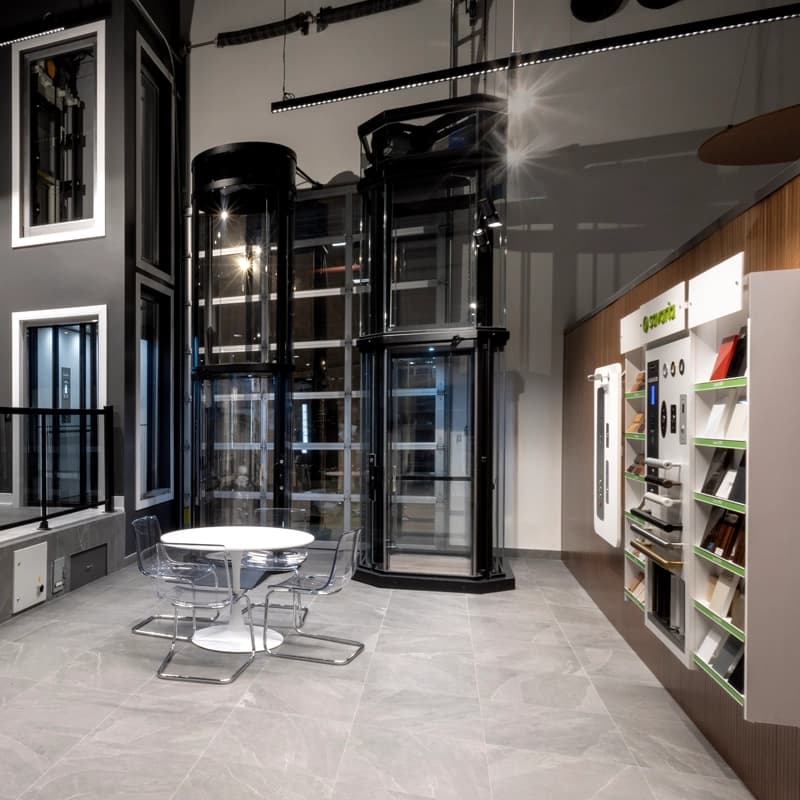
Early in the process, a visit to a showroom with a working Savaria home elevator is a great investment of your time. You will really get the sense of how you might finish your elevator, what kind of doors you might want, and good advice from the local dealer about how to prepare for your home elevator. When that’s not possible, the dealer can come to your home to discuss your needs and show you physical samples of finish options, photos and videos of installations.
Like most equipment in your home, there is a range of prices for a residential elevator. The starting price of a Savaria elevator, including the installation, is between $30,000 and $40,000 (USD) depending on the region. The cost of the hoistway construction would be an additional cost paid to your local general contractor. Price increases as you add the number of stops/travel distance, configuration of the elevator, and the finishes you chose. Savaria home elevator models range in base price with the Eclipse as the least expensive, to the Infinity, to the top-of-the-line Zenith.
The Savaria Vuelift Mini starts at $65,000 (USD) and this price includes the acrylic hoistway. So although the base price may be slightly higher than a traditional Savaria home elevator, there is typically less construction cost as no hoistway is needed.
See more about elevator costs, including ranges of additional options such as adding automatic gates and doors, or glass panels.

Ultimately a home elevator makes your home easier for everyone to access it.
Whether it’s for today, or the future, an elevator eliminates barriers for day-to-day life including moving groceries, laundry, luggage, strollers and mobility devices.
A home elevator can create barrier-free living when well-designed into your home’s floorplan. More people are including a home elevator in their renovation or new construction plans as they see the benefits of an elevator now, and as a way to age-in-place for the years to come. There is also an increase in the popularity of multi-generational housing. Co-habiting parents and young family members make housing more affordable and the addition of a home elevator allows everyone to enjoy all levels of the home.
Many builders of new subdivisions are adding home elevators to their properties as standard or as an optional upgrade. This is especially true for 3-and 4-level townhouses that have become popular due to the increased pricing of available land parcels. Older adults may see the location of the townhouse attractive, but the idea of so many levels of stairs as they age might be a deterrent to purchase.
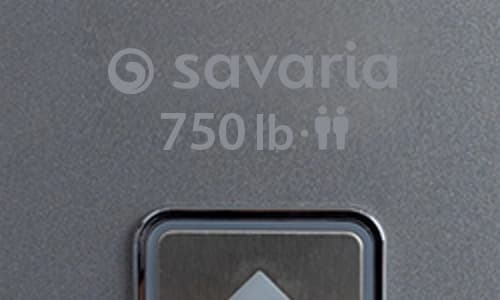
Home elevators vary in capacity depending on the model and upgrades chosen. Savaria residential elevators have a standard capacity of 950 lb, or several adults. You can upgrade this to as much as 1400 lb with a Zenith elevator or Infinity HD model. In some areas, the capacity is restricted by the local code. Your authorized Savaria dealer will know if there are capacity restrictions locally.
Learn more about elevator drives.
Step 4 – How can I finish my home elevator?
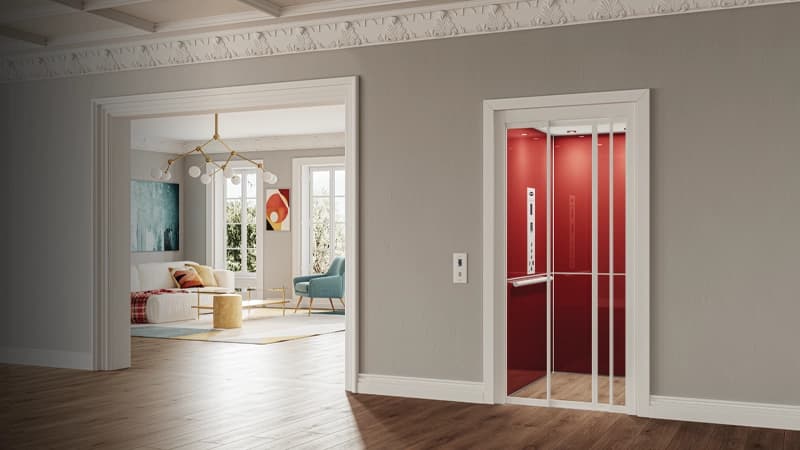
Once you have determined the elevator model that works best for you, and you know the cab size, number of doors and landings and travel distance of your elevator, the next step can be all about the aesthetics and that’s really fun!
- Regardless of what drive system you choose, you can finish it how you like
- Home elevator finishes include the cab interior, the hardware fixtures, the elevator cab gate and the landing doors
The walls of your elevator cab can be finished with Savaria-built options, or can be finished by your general contractor or builder. Savaria has one of the most extensive selections of cabs including standard durable melamine, luxury finished MDF, routed MDF, unfinished wood veneer and solid hardwood. The benefit of choosing Savaria factory finishes ensures that your cab precisely fits, allows the elevators to be fully serviceable, and respects the weight capacity of the elevator overall.
See our cab configurator to design your elevator.
Tip!
We’ve seen some bold combinations with our factory finishes! Similar to creating a dramatic powder room, an elevator cab be a fun décor space and a great talking point in your home. Don’t be afraid to make a statement with your home elevator!
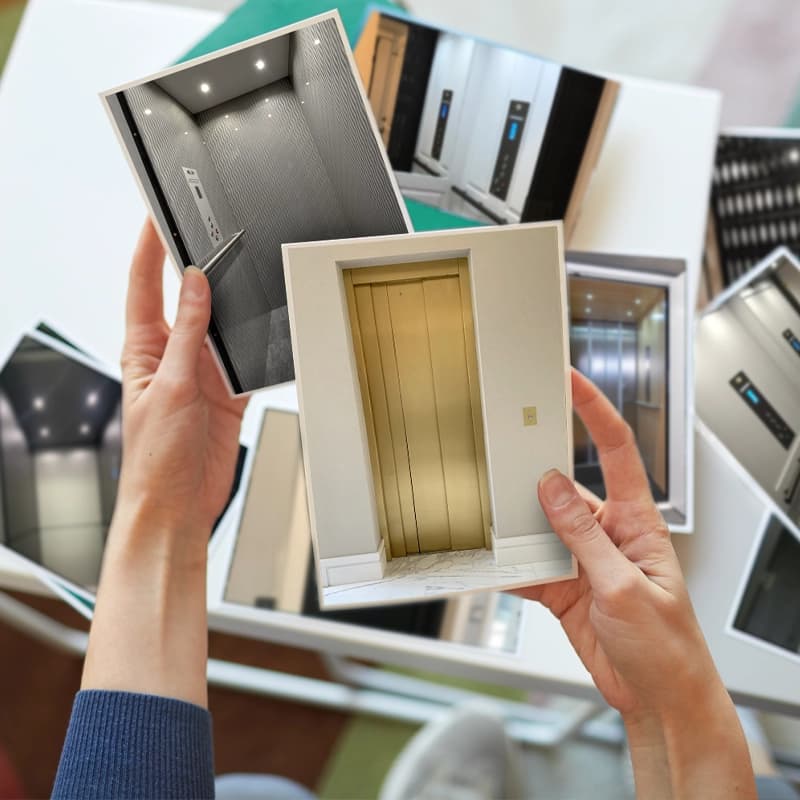
Savaria Factory Cab Finishes
Savaria offers a variety of standard smooth melamine finished panels. This is a durable, seamless finish.
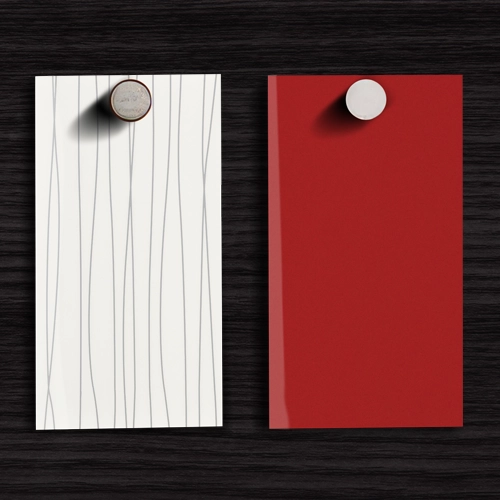
As an upgrade, Savaria has a range of MDF in different colors and finishes. Panels are edge-banded in black or white with a two-panel design. A routed white MDF cab option is also available. If you order a 96″ cab, the cab will feature a 3-panel design.

Available in satin white, the routed MDF cab is one of our most popular choices due to its classic style.
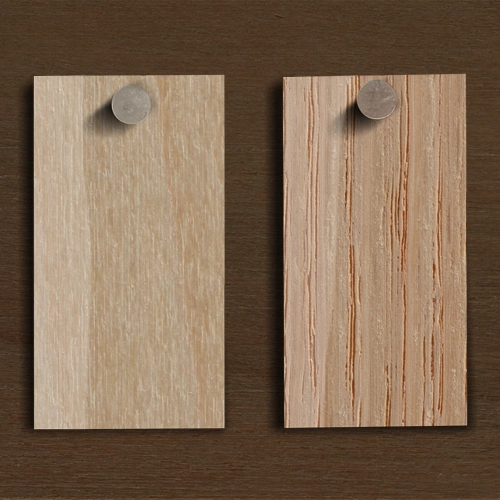
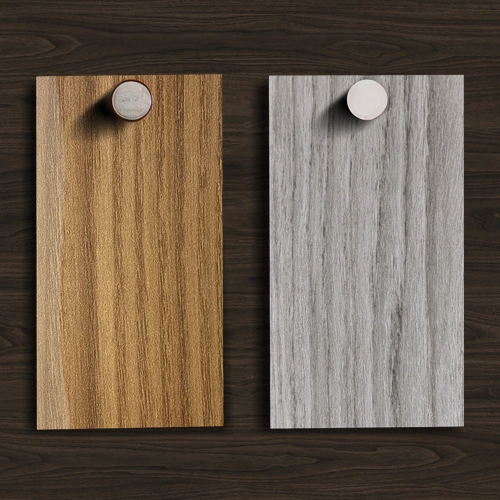
Choose from several wood species of veneer that can be stained and coated as desired by your contractor. Panels are full cab height without seams.
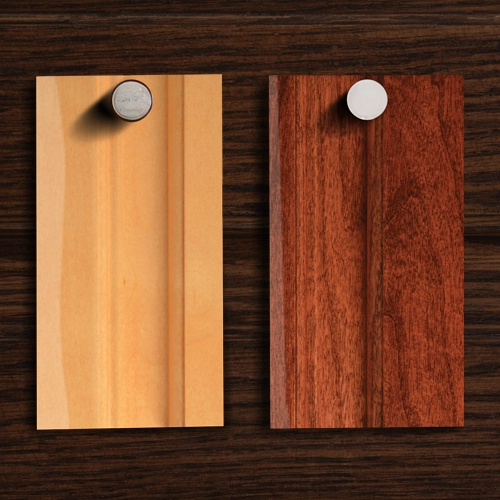
Savaria offers different solid hardwood species, in a range of stain finishes. Walls are raised and routed in a 4-panel design.
If you prefer to have your general contractor create custom cab walls, you can choose to have your elevator built with unfinished MDF or plywood where the cab can be finished on-site. Some homeowners opt for unfinished MDF as they plan to apply wallpaper to their elevator cab.
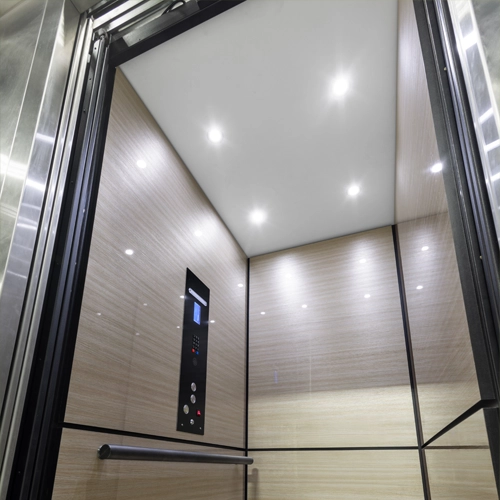
Savaria supplies a standard white melamine ceiling with your elevator. But you can also upgrade the ceiling to match the cab finish such as hardwood or white routed MDF. You can also choose a luxury MDF that matches your cab, or choose something different for contrast such as a black ceiling with a white cab.
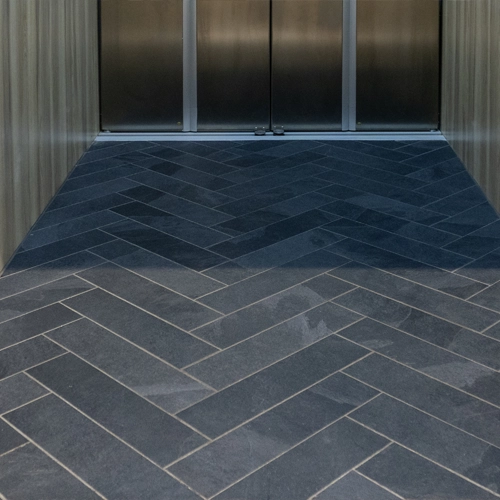
Your elevator will be built with an unfinished plywood sub-floor. Savaria allows for up to a ¾” recess to accommodate flooring. Your Savaria home elevator does not include finished flooring as you will want the flooring to be a continuation of the flooring in the rest of your home. Make sure your builder considers how to align planks or tiles to match hallways. For a fun alternative, consider special tile or mosaic tile for your elevator cab and make it a focal point.
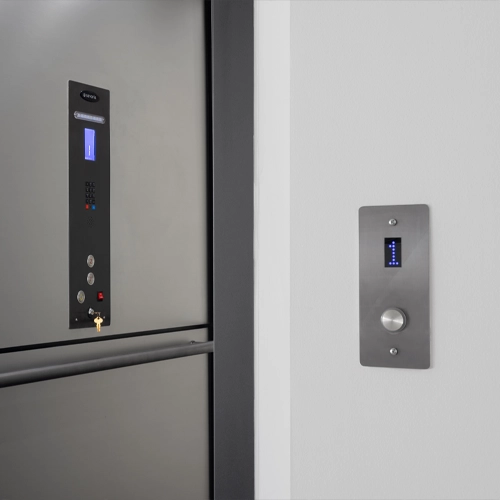
A Savaria home elevator includes 4 ceiling light fixtures, a handrail, a cab operating panel and hall calls for each landing. The fixture package is available in standard or upgraded metal finishes.
The standard operating panel includes an emergency stop button, an emergency light, and choice of phone keypad, phone box or the Savaria One-Touch alert button. A home elevator must include either a phone landline connection by the home owner, or a pre-paid nano sim card for the One Touch system. The inclusion of one of these two systems provides necessary two-way communications in case of emergency.
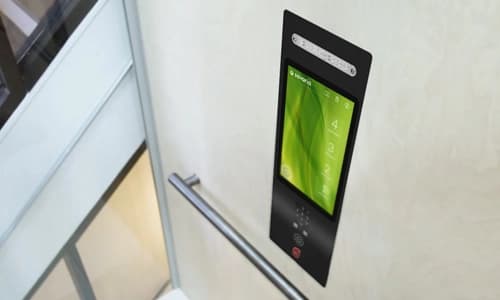
You can also upgrade the COP to include the Savaria Touch Screen panel. The large glass screen features a choice of animated themes and buttons to choose the landing floor. When you order your elevator, you can also choose custom landing names that better describe your home’s levels. Each theme has its own animation style indicating the travel direction of the elevator. You can also lock access to the elevator, activate the alarm, or access the elevator operating instructions from the screen. The Touch Screen is not yet available if you have concurrent landings – meaning you have two doors at the same landing.
Tip!
Customize your Savaria Touchscreen COP to your own special names for each landing. Got a golf simulator in your basement? You can call it the Tee Box or The Clubhouse. Going to the garage? How about the Pit Stop?
See more about the Touchscreen COP.

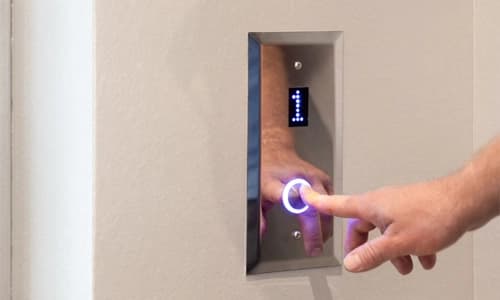
A hall call button and plate will be installed at each landing so you can call the elevator when needed. In addition to the fixture package choice of metals, you can choose an oval or rectangular plate to suit your taste. You also have the option to upgrade to include a position indicator on the hall call which would tell you what floor the elevator is at currently. With the Savaria luxury flush door option, the call/send button can be mounted into the door frame.
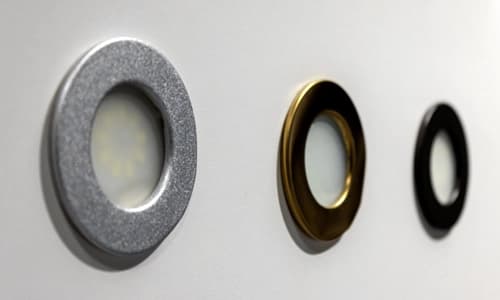
Savaria supplies 4 LED flush mount ceiling fixtures trimmed in your choice of finish from our selections. There is also an option to customize your light fixtures as long as you verify the electrical requirements of the fixtures with your local Savaria dealer.
The addition of a glass observation panel is a great choice if you want to take advantage of creating a view from your elevator. If you have a window built into your hoistway, this is a great way to let light into the cab and offer passengers a view to the outside.
If you truly want to create a special experience, a local experienced glass contractor can create a glass hoistway for your home elevator. Your local dealer can consult with you on this option.
If you love the look of glass, Savaria also offers a glass elevator option that includes a factory-built hoistway, available in round or octagonal models. Because it’s factory-built, the Vuelift glass proves to be more economical than a quality custom glass hoistway built on-site. See more about the Savaria Panoramic Glass Vuelift here.
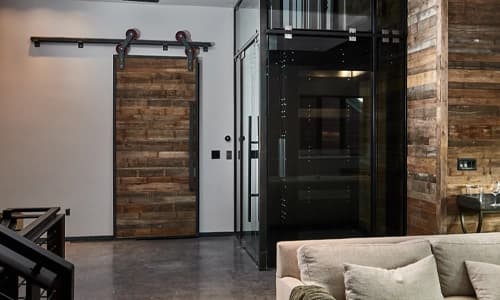
Step 5 – What is involved with a home elevator installation?
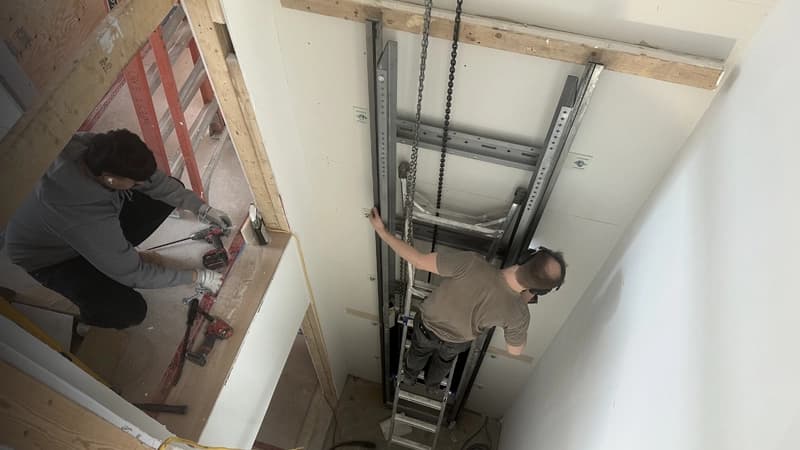
Your Savaria home elevator is manufactured to operate safely. But it is equally important to have a safely installed home elevator. Your local authorized Savaria dealer installer is there to ensure a safe install.
- Your local dealer installs the elevator
- Installation usually takes 3 to 8 days
In North America, home elevators shall meet ASME A17.1/CSA B44 Safety Code for Elevators and Escalators. Savaria takes safety very seriously, therefore, our elevators are designed and built to meet all safety code standards including the maximum travel speed, size and capacity maximums, gate and door interlocks, and overspeed governing.
It is also important that your home elevator is installed to meet this code. An important consideration for your installation is the proper installation of gates and landing doors for your elevator.
While Savaria can manufacture home elevators to meet any version of the Code, the 2016 rules for landing doors must be met even if your state or province follows a previous version of the code. This means that your elevator must be installed with landing doors meeting the ¾”-4″ standard
Your home elevator must have a manufacturer-supplied cab gate and it must also have a landing door at every landing. Savaria offers a range of different styles of gates and these gates can be operated manually or automatically.
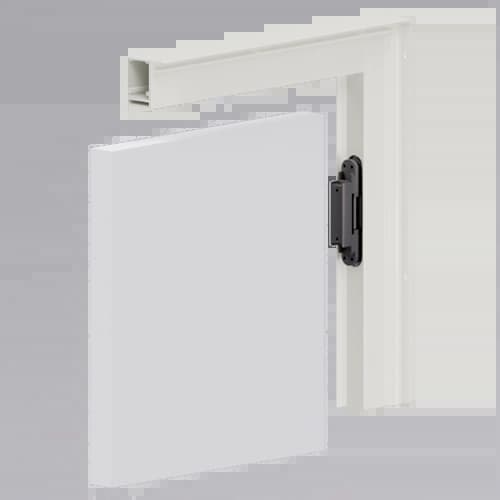
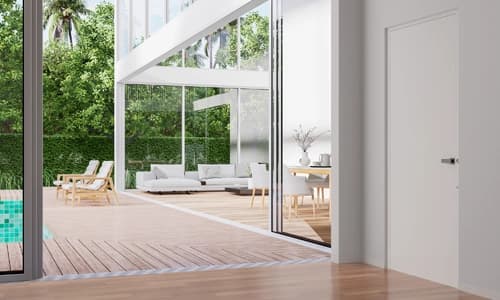
Savaria also makes landing doors to ensure a code-compliant installation. The Savaria luxury flush door ensures that the gap between the landing door and the elevator gate is minimized. The Savaria door features hidden hinges and a concealed interlock creating a sleek look with full code compliance for safety. You can also order this option as “frame-only”. This allows you to use a door slab from your builder that matches the rest of your doors, but with all the other great features of the Savaria flush door.
Alternatively, the landing doors can be provided by your general contractor as long as they meet the Savaria specifications and that they are installed to comply with the ASME 17.1/B44 2016 or later home elevator code.
Learn more about safe installation of landing doors.
Site Preparation and Installation Process
Your home elevator installation process takes place in stages that coincide with your renovation or new home construction. Although your installation timeline might differ based on the overall construction process at your home, here’s a general guideline of steps:

Your local Savaria dealer will provide you with a detailed quotation of the elevator for your home and this can also include drawings for your elevator that can be used by your architect or builder to prepare the site for the elevator. These drawings are also usually submitted for permit approval where required. Once you sign off on the drawings and the pricing with your dealer, the elevator can be sent into production at Savaria.

Savaria is known for its efficient production process. Lead time will vary based on the complexity of your project and if you have ordered any custom options. In general, production time is 4-5 weeks, and with more highly custom elevators it can be 10-12 weeks. Your dealer is able to advise you of the approximate production time.

Your builder or contractor will use the drawings and the Savaria model-specific planning guide to build the required hoistway to the correct specification. That includes a reinforced support wall for the travel rails, the pit and overhead spaces, and landing door entrances, electrical needed, a machine room if applicable and any custom option needs. Your local Savaria dealer installer or technician will likely visit the site to ensure that everything is being properly prepared for the installation.

Your Savaria dealer installer team will deliver, or arrange delivery of, the equipment to site. The installation will take a number of days – usually 4 to 8 working days depending on the complexity of your installation. Sometimes the elevator installation date will be set in coordination with your builder in order to coincide with other tradespersons’ work.

When the installation is done, including testing by your local Savaria dealer, you will be shown how to use your new home elevator. You will also receive documentation for your elevator including an Owner’s Guide with good tips on how to use and maintain your elevator. If you live in an area where inspection is required, your dealer will coordinate this process. In some cases, the builder may take the lead on the turnover process.
A Savaria home elevator uses an interlock system. When you call the elevator, you will only be able to open the hall door when the elevator has safely stopped and it releases the lock on the landing door. It is critical to have your home elevator maintained and serviced on a regular basis (a minimum of once a year). Your local Savaria dealer will go over the maintenance schedule with you.
Important Note!
Home elevators tend to attract children who want to play with the elevator. It is important not to allow children to ride the elevator by themselves and not to play with the elevator.
If there is a power failure, a Savaria home elevator includes a battery operated lowering system that is activated by pressing the button for any landing below you. The elevator will slowly lower to this landing and if you have an automatic gate, it will open as well.
Should the elevator stop working, the first step is to locate and press the blue reset button on the side of the elevator controller box. The elevator will then descend slowly to the lowest landing.
Learn more about Emergency procedures here.
Many people have grown frustrated with the planned obsolescence or short lifespans of home appliances in more recent years. A Savaria home elevator is designed and built to last many years. As long as the elevator is maintained, it should last 15 to 20 years or more. At that time, the elevator can be modernized to include replacing the electronics with current systems, and also updating the elevator cab, or adding automatic doors. This can extend the life of the elevator as though it were brand new again.
FAQs
Other things to know about home elevators
Some of the most common questions people have are answered below. Your local Savaria dealer is also a great resource to answer your questions, including those specific to your home.