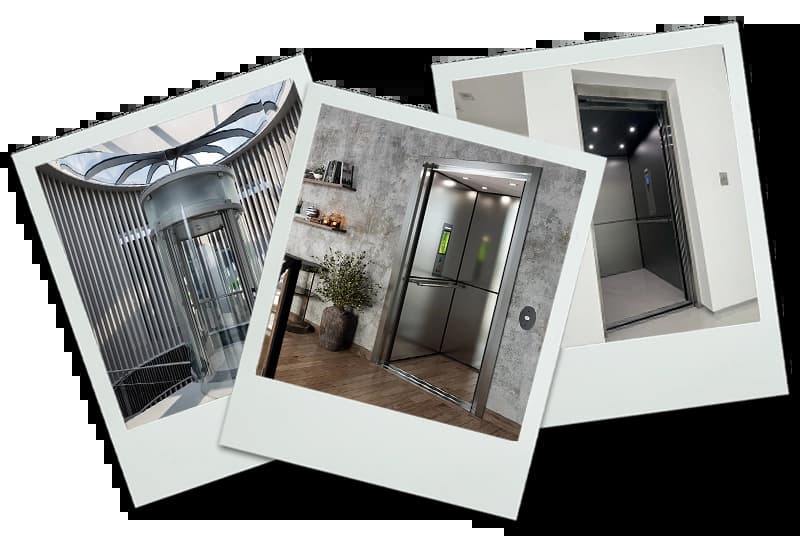
Ultimate Guide
to Home Accessibility
Making your home accessible can feel overwhelming, but the right solution can help you stay independent and safe. This guide explains all the main accessibility options for homes — from stairlifts and wheelchair lifts to through-floor lifts and home elevators. You’ll learn about costs, installation requirements, and how to choose the best product for your needs.
3 Questions To Find the Right Home Accessibility Lift for You
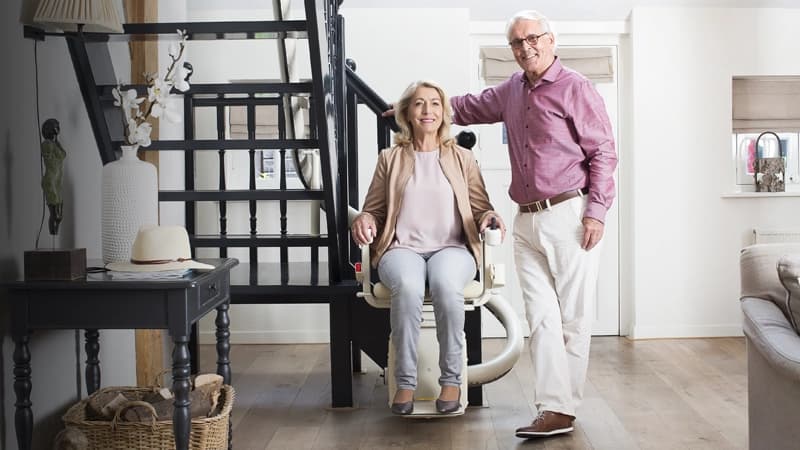
- Do you use a wheelchair now, or anticipate needing one soon?
- Do you need a stairlift or wheelchair lift only outdoors?
- Do you need to access only two levels inside?
If you use a wheelchair, or think you will need one soon, a stairlift is not an ideal choice. A better option is a wheelchair lift, through-floor lift, or a home elevator. Using a wheelchair with a stairlift requires you to transfer stably to the stairlift at both the top and bottom of the stairs which is not practical for the majority of people.
Wheelchair lifts and some stairlifts can be used outside to provide access into your home. In this instance, you will only have access to one level in your home, and you may need a second accessibility lift inside in your home is more than one level.
If you need to access a second level in your home, stairlifts, inclined platform lifts, a wheelchair lift inside a hoistway, a through-floor lift, or a home elevator are all options for you.
If you need access to more than two levels, a home elevator or a wheelchair lift installed a hoistway are the best options.
Budgetary Considerations
How much do home accessibility lifts and home elevators cost?Price range of accessibility lifts and elevators with installation for home use.
| Product | Price |
|---|---|
| Straight stairlifts | $3300- $5000 |
| Curved stairlifts | $10,000 - $25,000 |
| Porch lifts | $10,000- $20,000 |
| Over straight stairs, Inclined platform lifts | $20,000 - $30,000 |
| Home elevators | $30,000- $75,000 |
| Luxury home elevators | $75,000+ |
Stairlifts
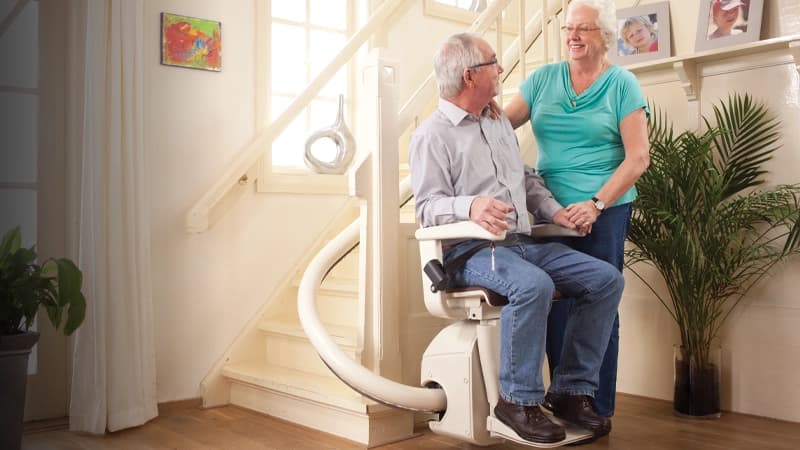
- Stairlifts are the easiest and most common products to install if you are having difficulty with the stairs but are not using a wheelchair. They install directly onto the stairs in a few hours and are easy to maintain. Savaria stairlifts are battery powered so they can be used several times during a power failure.

Stairlifts are motor-driven chairs that ride along a rail mounted to your stairs. They feature controls on the armrest to move them up and down. Most stairlifts use simple rack and pinion drive systems which mean that a motor turns a gear that interlocks with a toothed rack. The rack is part of the rail that follows the angle of your staircase.
Savaria stairlifts are battery powered. That means they will operate for several up and down trips even if there is a power failure. The stairlift is automatically charged on the rail.In some models, the charging occurs when the stairlift is parked at the bottom or the top of the rail.In other models, the stairlift charges on any point along the rail – called constant or continuous charging. Batteries should last a number of years and when you do annual maintenance, the battery can be checked.
There are two types of stairlifts; straight stairlifts that service a single flight of straight stairs, and curved stairlifts that service turning or curved staircases, stairs with an intermediate landing, multiple flights, or when you want to park the stairlift around a corner at the top or bottom of the staircase.
Straight stairlifts
How to choose the best straight stairliftThe right stairlift for you can depend on what features you need.
If you just need a basic stairlift
A basic stairlift does not have extra bells and whistles. Without extra power features, you will need to feel comfortable to swivel the seat at the top to get off the chair and you will need to fold up the footrest manually. See the Savaria K2.
Do you need a higher capacity?
If you are the heavier side, there are stairlifts with a higher capacity. These models have stronger seats, higher capacity travel rail and more power. See the Savaria K2 plus, or Handicare 1000 HD>
Do you need power features to make it easier to use?
At the top of the stairs, you need to turn your legs and use a lever to swivel the seat. If you find that difficult, you can upgrade to a powered seat swivel .The folding footrest can also be ordered with a power feature to fold and unfold it at the touch of a button eliminating the need to bend down to fold the footrest. This feature is available for curved or straight stairlifts, except the K2 plus and the Stairfriend 23.
Do you plan to install the stairlift outside?
If you plan to install a stairlift outside, you need to choose a stairlift built to endure weather conditions. Bear in mind that all outdoor stairlifts require extra maintenance for long-term reliability, especially when exposed to salt air or snow. An outdoor stairlift should be covered when not in use. See the Handicare 1000, 4000 (curved), or for mild outdoor climates, a Savaria K2 can be used. No stairlifts are suited to extreme snow or ice conditions.
What if you find it difficult to sit?
If you have limited knee or hip flexibility, you may find a semi-standing position more comfortable than sitting on a stairlift.A perch seat is shallow seat that is positioned higher – more like a barstool – to allow to ride the stairlift safely, yet more comfortably. Available only in the Handicare 1000 straight stairlift.
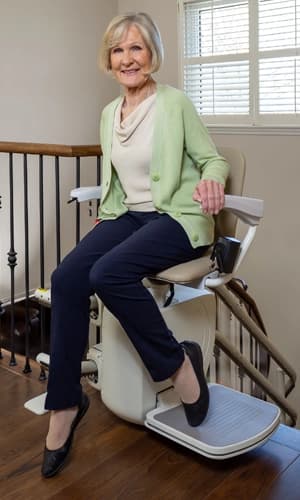
Savaria straight stairlifts model comparison
| K2 | K2 Plus | 1100 | 1000 | |
|---|---|---|---|---|
| Power features | Seat swivel, footrest | Seat swivel, footrest | Seat swivel, footrest | |
| Drive system | Rack and pinion | Rack and pinion | Multi-motor friction drive | Rack and pinion |
| Capacity | 300-350lb | 400lb | 310lb | 350-440lb |
| Folded depth | 10 ¾” | 13 ½” | 12 ¾” | 15 1/8” |
| Outdoor? | Mild only | no | no | yes |
| Special notes | Compact, best for narrow staircases | Robust for heavier users | Many options, narrow staircases, no gear rack | Best for outdoors, heavier users, hidden gear rack (appearance) |
The rail for the stairlift follows the angle of your staircase and takes up some space beyond the stairs both at the top and bottom. In many cases, this is not a problem because there might be wall space beside the rail. But if you have a doorway close the staircase at the top or bottom, there are several options that can minimize the protrusion to eliminate the rail as a potential tripping hazard.
This unique powered system is available on Handicare 1100 as an upgrade. As the stairlift moves up the rail, the rail simultaneously moves up until the protrusion is minimized at the bottom of the stairs. It’s common for staircases to have an entrance or doorway to another room near the bottom of the stairs. The slide track system can be a great way to keep the entrance clear of any tripping hazard.
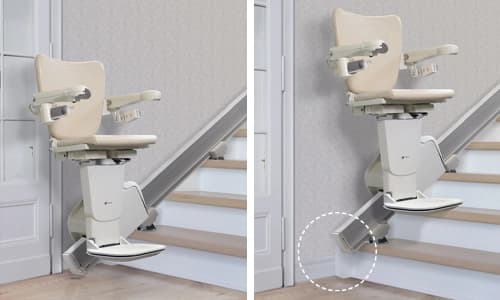
Some stairlifts can be ordered with a fold-up hinge. The allows a small portion of the lower rail to be folded at 90 degrees, for example with a gas strut to make it easier to fold. When the rail is folded, it no longer protrudes into a lower landing doorway, therefore eliminating any tripping hazard. Available on the Handicare 1100.
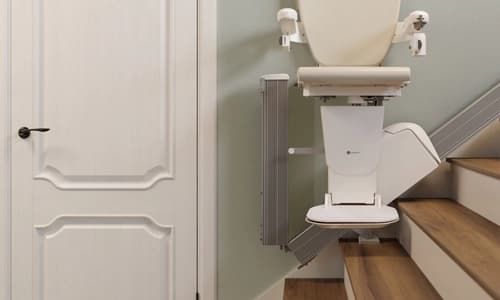
If you have an entrance or doorway at the top of the stairs, you can opt for different rail brackets to attach the top section of your rail. These special brackets will raise the angle of the rail to minimize or eliminate any protrusion at the top landing. The Savaria K2 and the Handicare 1100 both offer solutions for this.
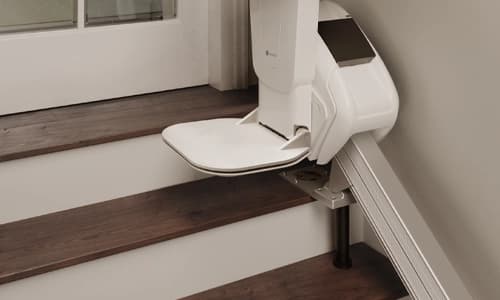
Curved stairlifts
Any staircase other than a single, straight flight is best suited for a curved stairlift
Types of Staircases
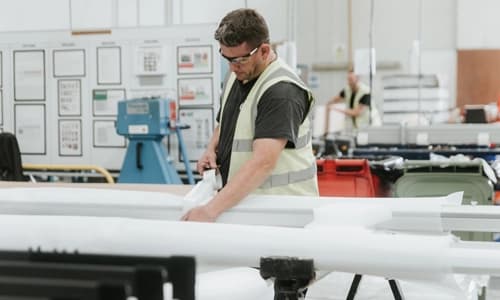
Savaria custom fabricates the rail for all its curved stairlifts. Some companies use pre-built rail sections that connect together on your stairs. This approach will never fit the staircase turns as well, causing the rails to take up additional space on the stairs especially in the curved sections. Our custom manufacturing process delivers a curved rail that is fabricated for your staircase only, where the rail is as tight to the side of the staircase as possible, leaving more room on the stairs.
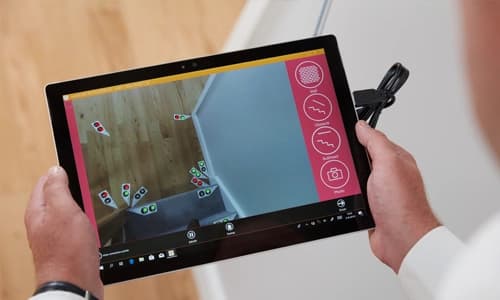
Savaria uses a proprietary photo measuring system (called PS4D) to precisely measure your staircase. It takes 30 to 60 minutes to do the survey which uses a camera and software to measure and draw your stairs. The dealer surveyor can then show you on a tablet what the chosen model of stairlift will look like when installed. In most case this can be arranged prior to you making a purchase. Once you agree to the model and configuration, the measurement data is then sent to the drafting department where shop drawings are produced for fabrication in our North American factory. Fabrication is both fast and accurate because of this process.
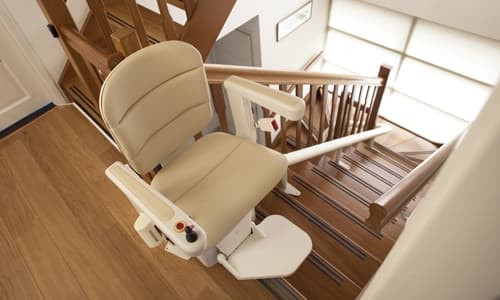
Savaria offers three models of curved stairlifts, the Handicare Freecurve, the Savaria Strairfriend 23, and the Handicare 4000.The Freecurve features a single tube design, whereas the Stairfriend and 4000 both feature a twin rail design.
If you have stairs with very tight turns, or a narrow staircase, twin-rail designs may fit better. Many people choose the single tube design because they like how it looks on the stairs. If you need powered features because of mobility issues to turn the seat, or bend down to flip up the footrest, choose a model that offers power features. Be mindful of the weight capacity if you are a heavier user.
Savaria curved stairlifts model comparison
| Stairfriend 23 | 4000 | Freecurve | |
|---|---|---|---|
| Rail style | twin | twin | Single tube |
| Capacity | 300-350lb | 300-350lb | 275lb |
| Choice of seat? | 2 | 5 | 3 |
| Power seat swivel option | no | yes | yes |
| Power folding footrest option | no | yes | yes |
| Active seat option | no | no | yes |
| Perch seat option | no | yes | no |
| Hinged rail | no | yes | yes |
| Outdoor? | no | Optional | no |
| Special notes | Tight turns possible | Tight turns possible, power options | Single rail design, with power options |
Optional Upgrades to Consider for Your Curved Stairlift

A parking feature is a special rail bend fabricated to turn 90 or 180 degrees at the top or bottom of your staircase (or at both the top and bottom).Parking creates less obtrusion of the lift on your staircase, and it also offers a more spacious and safe area to get on and and off the chair. If you are ordering a curved stairlift, adding parking is an inexpensive extra that is a great investment, especially at the top of the stairs so the stairchair can be completely out of the way.

Savaria curved stairlifts include a paddle lever, similar to an office chair, that allows you to swivel the chair at the top of the stairs so you can safely get off the chair, facing away from the stairs. You can upgrade to a motorized seat swivel if you find it difficult to turn the seat using your legs and the manual swivel lever.

The footrest folds up, as do the arms and seat, in order to free up space on the stairs when the stairlift is not in use. If you find it difficult to fold the footrest manually, you can add a motorized folding footrest.

The stairlift rail at the bottom of your staircase can ordered with a powered fold-up feature if you have a doorway close the base of your stairs. This will keep the rail out of the way when the stairlift is not in use. Available on the Handicare 4000 and Freecurve.

For some configurations, it may be best to opt for a “drop nose” at the bottom of your stairs. This is special bend fabricated into the rail at the time of order so the railing is less obtrusive. The local Savaria dealer would discuss this with you during the site assessment.

Similar to a lift and recline chair, an active seat is a powered feature to raise the back of the back of the seat to help the user stand up or sit down. This feature is available on the Handicare Freecurve. (except Quebec)
Although you don’t sit on the stairlift for that long, it’s important to find one that feels comfortable and accommodates your body shape best so you feel secure while riding the stairlift. If you require more width, choose a seat that offers width- adjustable arms appropriate to your size.
Seat Measurement Chart
| Stairfriend | L Seat | V Seat |
|---|---|---|
| - | - | - |
| - | - | - |
| - | - | - |
| - | - | - |
| Handicare 4000/ Freecurve | Simplicity | Style | Smart | Perch |
|---|---|---|---|---|
| - | - | - | - | - |
| - | - | - | - | - |
| - | - | - | - | - |
| - | - | - | - | - |
FAQs
Other things to know about Stairlifts
Some of the most common questions people have are answered below. Your local Savaria dealer is also a great resource to answer your questions, including those specific to your home.
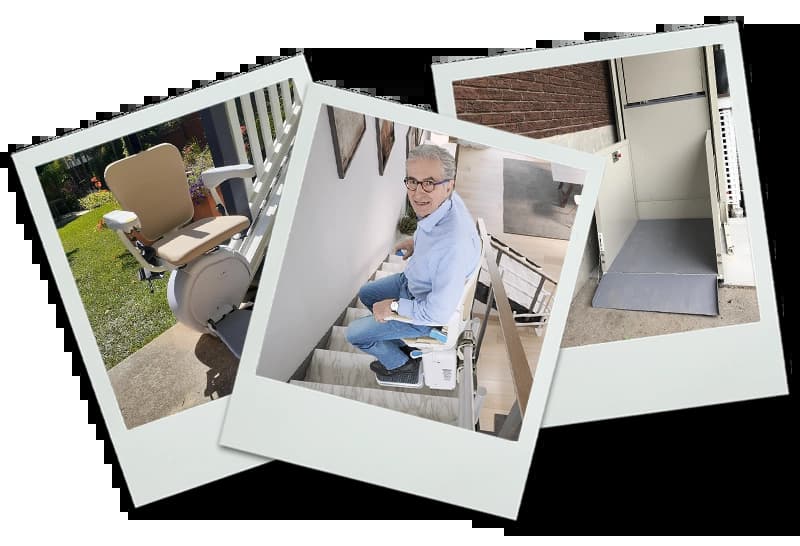
Wheelchair Lifts
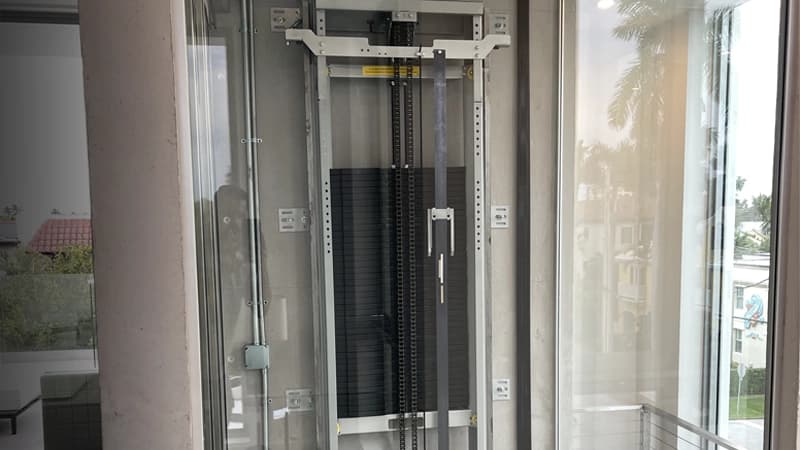
- If you use a wheelchair now, or anticipate using one in the near future, a wheelchair lift may be the best solution to make your home accessible. A wheelchair lift can also accommodate other mobility devices such as scooters and rollators. All wheelchair lifts operate with constant pressure buttons, meaning that you need to press the button to make them run and when you stop pressing the button, the lift stops.
Wheelchair lifts are designed with two types of movement: vertically, or inclined. Both types feature a platform to accommodate a wheelchair but vertical platform wheelchair lifts move straight up and down, whereas inclined platform wheelchair lifts are wall-mounted, or mounted on posts to a structural staircase, and follow the angle of the stairs.
Where Can I Install A Wheelchair Lift?
Many homes feature stairs outside. To eliminate this barrier, a vertical platform wheelchair lift can be the ideal solution. Often called a deck or porch lift, the Savaria Multilift is ruggedly constructed, with a zinc-coated platform, for use outside. The lift provides access from the ground level to the porch area which can be at the front, side or back of your home.
Often times, a garage includes an elevated entry door to the home. A Savaria Multilift can be installed to provide barrier-free access to the entry door. Garage installation has the added benefit of protecting the lift and the user from rain or snow.
A local dealer can provide a site assessment to plan the best location and entry for your home. This can include access through a backyard or even via a new door opening constructed for entry.
There are ways to install a wheelchair lift inside your home to access a second level, including inside a hoistway, or a through-floor lift. It may also be possible to install an inclined platform wheelchair lift onto your staircase.
A Savaria V1504 wheelchair lift can be installed inside a constructed hoistway. This can provide access for up to 4 stops and as much as 23 feet of rise (travel) in your home. The lift can have more than one entrance depending on your needs. It can be finished with cabin walls and a false ceiling similar to an elevator, but the operation of the lift uses constant pressure (push-to-run buttons).
Wheelchair lifts do not have car gates that travel with the lift because the lift travels close to the wall with a specified space called the running clearance. The user does not have to worry about operating gates making the lift simpler to use. Each landing has a flush landing door equipped with an interlock that will only open when the lift is present.
There are other options available to make the lift easier to use if you have mobility challenges with your hands or arms. You can add an automatic door operator, or even a joystick for controlling the up/down of the lift.
If you cannot accommodate a hoistway in your home, an inclined platform lift may be an option to provide access to a second level. For most residential indoor applications , the Savaria Delta will be wall mounted to a slightly reinforced wall. Post-mounted units on stairs are typically installed for outdoor application where the lift is mounted to concrete stairs.
If you order the lift with automatic operation, the platform folds out and deploys an access ramp by pressing the controls on the hand pendant. Safety arms lower and with the wheelchair in a locked position, the user rides on the lift to the next landing where the ramp lowers and safety arms raise. The platform will then automatically fold up to allow clearance on the staircase. Manual operation requires the platform to be folded by the user or caregiver.
What Work is Needed to Prepare for A Wheelchair Lift Installation?
Some construction preparation is required prior to the installation of an outdoor lift. Savaria outdoor wheelchair lifts require anchorage to a poured concrete pad. You will also require a dedicated electrical outlet with disconnect, near the lift. If the lift travels more than 30″ (24″ in Canada), it must include a solid, flush mounted top landing gate. The gate is mounted to the deck and features an interlock so that it can only be opened if the lift is at the top landing. A contractor-provided fascia panel may also be required to eliminate any pinching hazards as the lift travels up and down.
If you have the space to build a hoistway in your home, construction requires 2 by 6 and 2 by 4 framing for the rail supporting wall. Electrical wiring must be provided, and the shaft is finished with drywall. To create a level entrance at the bottom landing, a 3 inch pit is required below the lift. If that is not feasible, then a fixed ramp can be used for access. Savaria provides a planning guide for the V-1504 wheelchair lift which details construction requirements and includes reference drawings.
An inclined platform lift must have adequate clearances for the lower landing. The amount of space needed depends on the size of the platform, the angle the stairs, and if the platform provides straight-through or 90-degree access. You will also require a minimum stair width of 38″. The reference chart below shows examples of how much space is required for the Savaria Delta lift. For wall-mounting to a wood stud wall, minor reinforcement will need to be done by a general contractor.
Lower Landing Clearance Requirements
| - | - | - | - | - |
|---|---|---|---|---|
| - | - | - | - | - |
| - | - | - | - | - |
| - | - | - | - | - |
| - | - | - | - | - |
When installing an inclined platform, it is important to verify that the staircase and/or rail wall provide adequate structural support The Delta lift planning guide details the installation methods and construction requirements.
Through-Floor Lifts
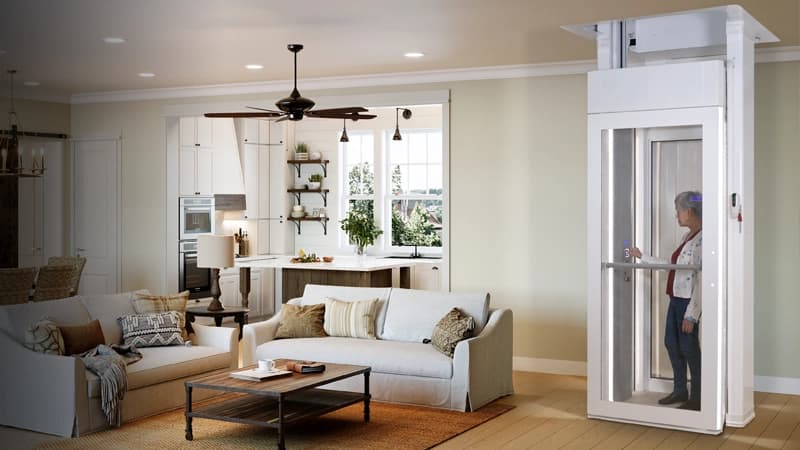
Savaria makes several models of these lifts – which give you a home elevator feel with a smaller footprint and less construction cost as you don’t need to build a full hoistway. Through-floor lifts are easier to retrofit in an existing home than a home elevator. But keep in mind they are limited to two stops by design and by code requirements as well.
- One the easiest ways to make your home barrier-free is a through-floor lift. Savaria through-floor lifts service two-stops with a fully enclosed cab. With no need to build a hoistway, the lift travels through a floor cut-out. At the top level, a floor plug covers the floor when the lift is at the lower landing. As the lift travels up, the floor plug rides atop the lift to the second level
Through Floor Lift Model Comparison
| Luma Lift | Telecab | Telecab 17 | ||
|---|---|---|---|---|
| Capacity | 400 lb | 500 lb | 845 lb | |
| Door clearance | - | - | - | - |
| Max travel distance | 13" | 23’ | 23’ | |
| Support wall needed? | no | yes | yes | |
| Minimum footprint required | 38" x 47" | 60.5" x 36" | 60.5" x 35.25" | |
| Drive system | Winding drum | 2:1 roller chain hydraulic | 2:1 roller chain hydraulic | |
| Emergency service | Battery powered, provides several up/down trips during power failure | Manual lowering mechanism, with optional battery back-up system available | Manual lowering mechanism, with optional battery back-up system available |
If you are unsteady or worried about falling on the stairs, the Luma lift is a great alternative to a stairlift. The Luma can accommodate a mobility aid such as a cane, a walker or rollator. If you are a wheelchair user, the Luma cab will be too small and the Savaria Telecab may be the better option.
The Luma lift does not require a support wall and uses self-supporting rails, making the Luma very flexible for placement in your home. Savaria Telecab models require anchorage to a reinforced support wall, therefore you must be able to find a suitable location on both levels of your home with the support wall. With its larger cab options, the Telecab can accommodate a wheelchair and the Telecab 17 can handle heavier devices such as power chairs and scooters.
Both the Luma and Telecab feature a sloped floor which removes any tripping hazard and makes it much easier to get in and out with wheeled mobility devices. This is an important feature to consider when choosing a through the floor lift provider.
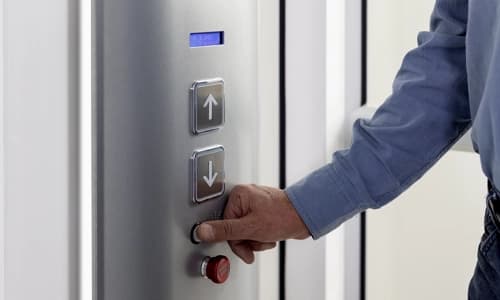
Where can a through-floor lift be installed?
Luma lift placement
A common through-floor lift installation can go from a main floor living area, to a second level hallway.

With a straight-through entrance configuration, the Luma lift can service entry from a room on the main floor to the second level, allowing the user to easily travel with a mobility device – you can walk or roll straight through.

txt to come.
txt to come.
txt to come.
txt to come.
Construction Preparation for a Through-Floor Lift
Construction preparation by your local contractor for the Luma includes reinforcement of the ceiling for the floor-cutout area, as well as electrical provisions. It is possible that your lower floor will also need reinforcing to meet the structural requirements listed in the planning guide especially if there is living space below the bottom landing.
The electrical requirements are minimal as the lift only requires an outlet for the battery charger. It is preferable to have the power at the through-floor location, but it is feasible to run the power to a nearby outlet, although the power cord is visible or can be a tripping hazard in this situation.
The Luma comes standard with the One Touch Alert system for emergency two-way communications. A nano Sim card must be provided by the owner for this important safety system.
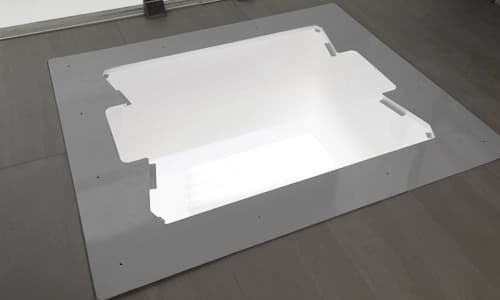
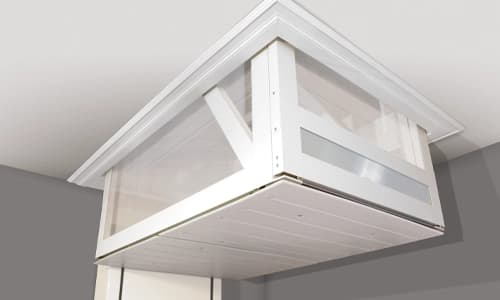
A Telecab requires installation onto a wall that can support a 700lb pull-out force and the lowest floor must support a load of 3200lb underneath the lift. Suggestions on how to build the support walls and the floor plug support are available in the product planning guide. This work is completed by your local general contractor with the reference in the planning guide and the installation drawings provided by Savaria for your specific product.
The Savaria Luma lift installation usually takes 1 day but may take up to 2 days. The ceiling/floor cut-out will be trimmed with a liner to finish the opening. There will also be trim for around the upper landing floor area.
A Telecab lift installation will take a few days. The drive tower will be anchored to the support wall. At the upper landing, the floor cap is often finished with the same flooring as that level to create a more seamless look when the lift is at the lower landing area.
How is a through-floor lift different from a home elevator?
Through-floor lifts use constant press operation, whereas home elevators feature automatic operation. Through-floor lifts service two levels and include features for easier use of mobility aids and accessibility devices such as non-skid flooring. Savaria home elevators can be used for accessibility, but they do not feature non-skid flooring and they can travel more than two stops.
For more information on home elevator see our Ultimate guide for Home elevators.